

English


₹2523
₹2577
2.1% OFF
(All inclusive*)
Paperback
Delivery Options
Please enter pincode to check delivery time.
*COD & Shipping Charges may apply on certain items.
Review final details at checkout.
Looking to place a bulk order? SUBMIT DETAILS
Delivery Options
Please enter pincode to check delivery time.
*COD & Shipping Charges may apply on certain items.
Review final details at checkout.
About The Book
Description
Author
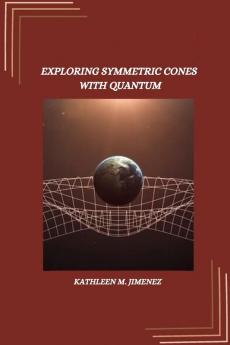
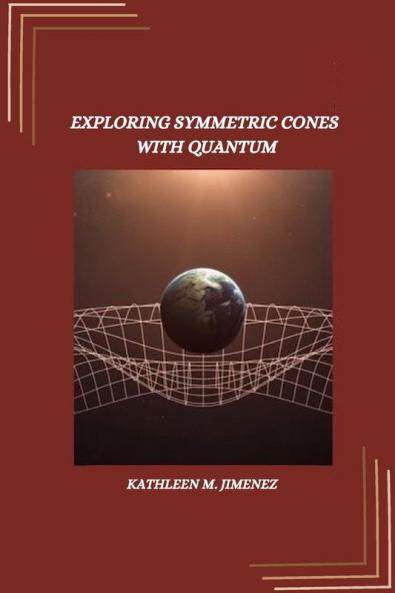
<p>Quantum algorithms for optimization often achieve speedups in the&nbsp;problem dimension.&nbsp;Yet their&nbsp;&nbsp;error dependence and sensitivity&nbsp;to&nbsp;scale makes it&nbsp;challenging&nbsp;to&nbsp;identify broad classes of&nbsp;optimization&nbsp;problems for which thei r&nbsp;is a&nbsp;clear advantage over classical&nbsp;algorithms.&nbsp;This&nbsp;</p><p>dissertation is comprisedof multiple projects spanning three parts that seek to reducethis gap.&nbsp;Part I concerns quantum linear algebra. We provide a construction for implementing matrix&nbsp;arithmetic operations&nbsp;such as&nbsp;Kronecker&nbsp;and Hadamard&nbsp;products on a quantum&nbsp;computer. Then&nbsp;</p><p>we demonstrate how Iterat ive Refinement can be leveraged&nbsp;to exponentialy improve the dependence&nbsp;on precision&nbsp;in&nbsp;the&nbsp;overall running time associated&nbsp;with classicaly solving linear systems of equations using quantum computers.</p><p><br></p>

Piracy-free

Assured Quality

Secure Transactions

Fast Delivery

Sustainably Printed
Details
ISBN 13
9785396844575
Publication Date
-03-11-2023
Pages
-198
Weight
-276 grams
Dimensions
-152x229x10.66 mm
