


English


₹3775
(All inclusive*)
Paperback
Delivery Options
Please enter pincode to check delivery time.
*COD & Shipping Charges may apply on certain items.
Review final details at checkout.
Looking to place a bulk order? SUBMIT DETAILS
Delivery Options
Please enter pincode to check delivery time.
*COD & Shipping Charges may apply on certain items.
Review final details at checkout.
About The Book
Description
Author
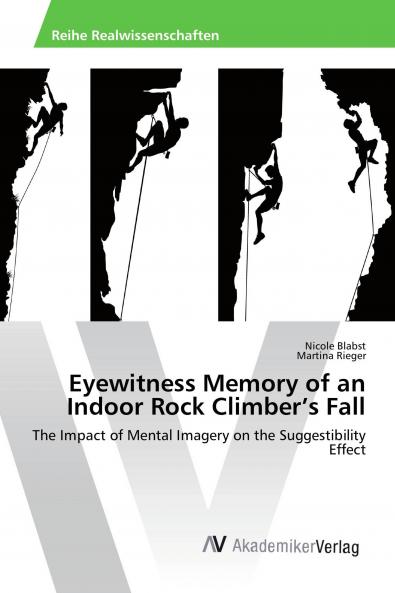
For a long time major research interests on eyewitness memory have been focused on the flaws and the malleability of memory. Recently a positive approach is What can be done to enhance eyewitness memory and protect it against misleading information? The current online study is on one hand in line with this modern approach by applying mental imagery to the suggestibility effect. On the other hand the design of the original and defining study of Loftus & Palmer (1974) is transformed into a new setting. Participants (n = 272) had to watch a video of an (secure) indoor rock climber's fall. A 3x3 between-subjects design was conducted using mental imagery (MI before MI afterwards Without MI) and leading question (Touch Smash Control) as factors. The dependent variable of the first part of the experiment was the speed estimate given in response to the leading question which implied different speed levels. After a one-week delay participants were questioned again. This time the dependent variable was the injury estimate. The statistical analysis revealed a significant difference in speed estimates depending on the leading question.

Piracy-free

Assured Quality

Secure Transactions

Fast Delivery

Sustainably Printed
Details
ISBN 13
9783639872682
Publication Date
-18-07-2016
Pages
-52
Weight
-85 grams
Dimensions
-150x220x3.27 mm
