

English


Paperback
₹9978
(All inclusive*)
Delivery Options
Please enter pincode to check delivery time.
*COD & Shipping Charges may apply on certain items.
Review final details at checkout.
Looking to place a bulk order? SUBMIT DETAILS
Delivery Options
Please enter pincode to check delivery time.
*COD & Shipping Charges may apply on certain items.
Review final details at checkout.
About The Book
Description
Author
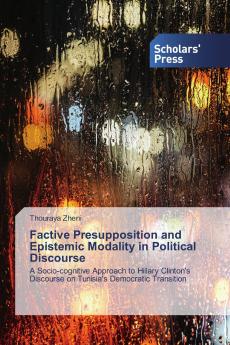
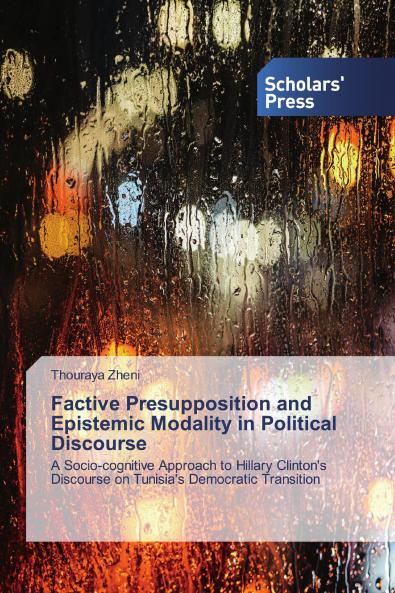
An interesting book on the socio-cognitive dimensions of political discourse and political cognition. It demystifies the cognitive mechanisms that govern discourse production and comprehension. It is an extensive study that sheds light on factive presupposition and epistemic modality and how they reflect the discourse emitter's values attitudes knowledge background and ideology. The selection of the political discourse of the US ex-Secretary of State Hillary Clinton and Tunisia's democratic transition as a case study aims to show how the speaker mediates her democratic community's norms values and interests as well as her personal perception and conception of democracy and human rights in the Arab World. This work investigates the factual vs. ideological knowledge traces in H. Clinton's political discourse. It also unveils the US interests and agendas in North Africa and the Middle East via the linguistic analysis of its former Secretary of State's political speeches and remarks. To reach this end Van Dijk's (1995) Discourse-Cognition-Society triangular approach to CDA has been implemented. Enjoy reading!

Piracy-free

Assured Quality

Secure Transactions

Fast Delivery

Sustainably Printed
Details
ISBN 13
9786202319829
Publication Date
-22-11-2018
Pages
-268
Weight
-349 grams
Dimensions
-150x220x14.37 mm
