

English


Paperback
₹4195
(All inclusive*)
Delivery Options
Please enter pincode to check delivery time.
*COD & Shipping Charges may apply on certain items.
Review final details at checkout.
Looking to place a bulk order? SUBMIT DETAILS
Delivery Options
Please enter pincode to check delivery time.
*COD & Shipping Charges may apply on certain items.
Review final details at checkout.
About The Book
Description
Author
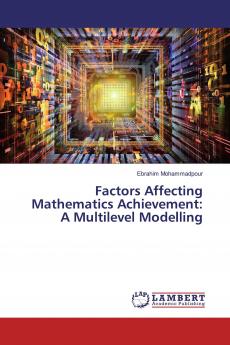
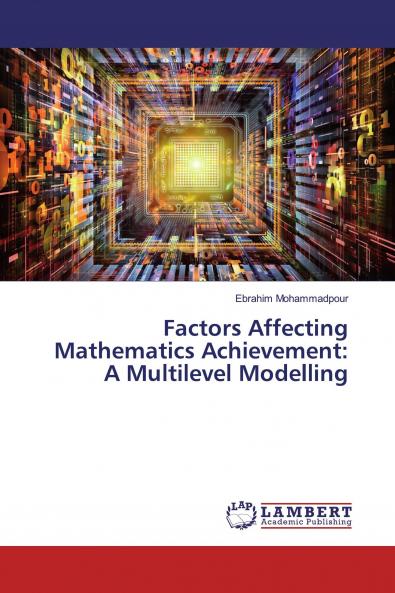
This article aims to investigate variations in mathematics achievement for secondary school students across the Trends in International Mathematics and Science Study (TIMSS) assessments and to examine the relations of several student- and school-level factors with achievement. The data were obtained from 5577 5314 and 4466 Malaysian eighth graders who participated in TIMSS 1999 2003 and 2007 respectively. A two-level multilevel modeling technique was used. The results indicate that 59.02% 53.39% and 61.33% of variance in achievement scores accounted for betweenschool differences in the 1999 2003 and 2007 studies correspondingly. After controlling for the school-level factors mathematics self-concept and attitude towards mathematics yielded the strongest link to achievement in the three assessments. At the same time controlling for the student-level factors school location had the strongest association with achievement in the three assessments however the trend in the correlation coefficient between this factor and the achievement is decreasing across the assessments.

Piracy-free

Assured Quality

Secure Transactions

Fast Delivery

Sustainably Printed
Details
ISBN 13
9783330045712
Publication Date
-10-04-2019
Pages
-52
Weight
-81 grams
Dimensions
-150x220x3.27 mm
