




This Book is Out of Stock!
English



Hardback
₹7184
₹8886
19.15% OFF
(All inclusive*)
Delivery Options
*COD & Shipping Charges may apply on certain items.
Review final details at checkout.
Looking to place a bulk order? SUBMIT DETAILS

Piracy-free

Assured Quality

Secure Transactions
About The Book
Description
Author
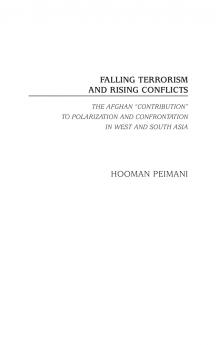
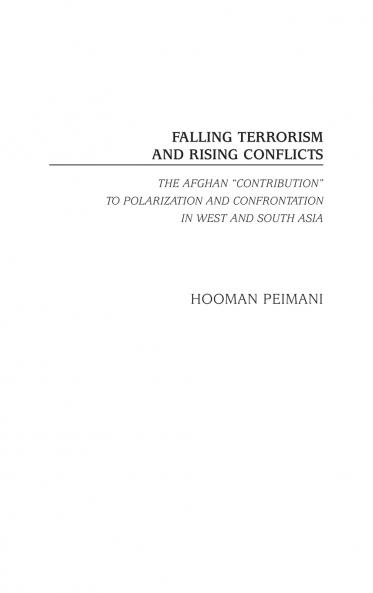
The Taliban''s fall and the massive American military and political presence in South and West Asia have created grounds for a polarization into two camps: India Iran and Russia to which China is affiliated and the United States and Pakistan. In Peimani''s analysis their incompatible interests will push them towards confrontations with regional and international implications.Contrary to expectations the fall of the Taliban did not bring peace and stability to Afghanistan. The Afghan interim government is simply too weak to act as a central government; this results in the re-emergence of warlords turf wars and the expansion of drug trafficking. This unstable situation may well result in the emergence of Taliban-like groups. Added to this the threat of the spillover of instability from Afghanistan into neighboring regions on the one hand and the rapid expansion of American military and political power in Central Asia the Caucasus the Persian Gulf Afghanistan and Pakistan on the other have created fear among the regional powers.The stated indefinite stay of American forces well after the end of the anti-terrorist war in Afghanistan has worsened that fear as it reflected the American government''s plan to pursue certain strategic interests unrelated to that war. Consequently as Peimani shows the regional anti-terrorist coalition has disintegrated in the absence of a common objective to help focus the region. Fear of the long-term American objectives and those of its Pakistani ally in South and West Asia incompatible with those of the regional powers have facilitated the creation of two camps consisting of Iran India and Russia to which China is affiliated and Pakistan and the United States. Respectively these implicit and explicit camps are likely to collide over their regional interests especially in the strategically important energy-producing Persian Gulf and Caspian Sea regions.
Piracy-free
Assured Quality
Secure Transactions
*COD & Shipping Charges may apply on certain items.
Review final details at checkout.
₹7184
₹8886
19% OFF
Hardback
Out Of Stock
All inclusive*
Details
ISBN 13
9780275978570
Publication Date
-30-09-2003
Pages
-160
Weight
-329 grams
Dimensions
-156x234x11.11 mm
