


English


Hardback
₹15293
₹17777
13.97% OFF
(All inclusive*)
Delivery Options
Please enter pincode to check delivery time.
*COD & Shipping Charges may apply on certain items.
Review final details at checkout.
Looking to place a bulk order? SUBMIT DETAILS
Delivery Options
Please enter pincode to check delivery time.
*COD & Shipping Charges may apply on certain items.
Review final details at checkout.
About The Book
Description
Author
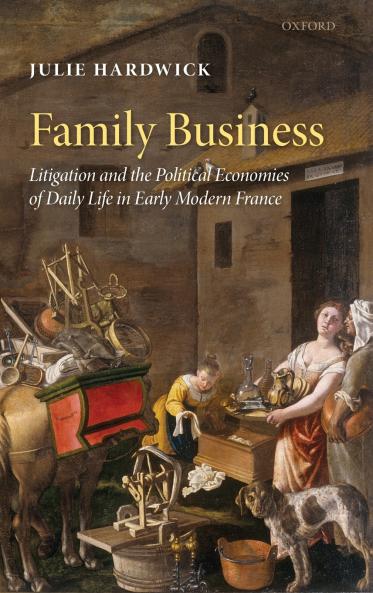
In seventeenth-century France families were essential as both agents and objects in the shaping of capitalism and growth of powerful states -- phenomena that were critical to the making of the modern world. For household members neighbors and authorities the family business of the management of a broad range of tangible and intangible resources -- law borrowing violence and marital status among them -- was central to political stability economic productivity and cultural morality. The business of family life involved relationships that could be intimate (family and neighbors) intermediate (litigant and judge) or distant (governing authority and subject) and the resources in question were the currency of the early modern world these people knew. In all these regards litigation was a key means of negotiating and contesting the challenges of daily life and the larger developments in which they were embedded.The relationships between families economies and states have often been reframed but the perils as well as promises have persisted. Then as now husbands and wives found the experience of marriage to be fraught with uncertainty and risk; economic insecurity and ubiquitous borrowing were profound challenges; domestic violence was a telling marker of inequality in families. Julie Hardwick examines a critical period in the long history of family business to highlight the centrality of the lived experiences of working families in major political economic and cultural transitions.

Piracy-free

Assured Quality

Secure Transactions

Fast Delivery

Sustainably Printed
Details
ISBN 13
9780199558070
Publication Date
-25-06-2009
Pages
-272
Weight
-483 grams
Dimensions
-156x234x15.88 mm
