



This Book is Out of Stock!
English


Hardback
₹5573
₹6375
12.58% OFF
(All inclusive*)
Delivery Options
*COD & Shipping Charges may apply on certain items.
Review final details at checkout.
Looking to place a bulk order? SUBMIT DETAILS

Piracy-free

Assured Quality

Secure Transactions
About The Book
Description
Author(s)
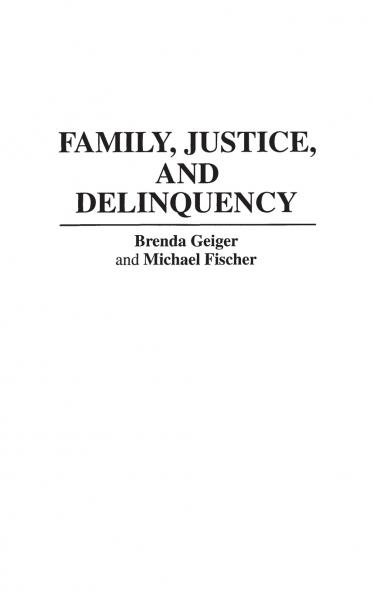
Nuclear family and kibbutz childrearing practices are compared from a Rawlsian perspective of justice. Based upon the kibbutz educational system which has reinstituted the family Geiger and Fischer propose a model of educational change for consideration in the United States. This model is designed to strengthen the nuclear family while improving the prospects of disadvantaged anomic and unattached youth.Geiger and Fischer examine within a Rawlsian perspective several child-rearing institutions affecting children. Justice as fairness would consider a child-rearing institution and its inequalities as fair if there are no alternative arrangements under which the prospects of least-advantaged children could be improved. Among these least-advantaged children are those who are neglected abused and stripped of self-respect. As the nuclear family disintegrates the authors ask whether it can fulfill its child-rearing function. Utilizing a self-report study conducted on socialization and delinquency in Israel as well as several other observational studies the authors demonstrate that in a more egalitarian structure such as the kibbutz least-advantaged children have more opportunities to develop into autonomous responsible individuals. For Americans the kibbutz educational system shows new paths for change from nursery school through high school that would allow for greater bonds between the family school work and the community. An emerging sense of community would also stimulate the moral and intellectual growth of disadvantaged youth. This book is recommended to researchers and policy makers in the areas of education delinquency and social welfare.
Piracy-free
Assured Quality
Secure Transactions
*COD & Shipping Charges may apply on certain items.
Review final details at checkout.
₹5573
₹6375
12% OFF
Hardback
Out Of Stock
All inclusive*
Details
ISBN 13
9780313294587
Publication Date
-30-01-1995
Pages
-168
Weight
-340 grams
Dimensions
-156x234x11.11 mm
