



English





Paperback
₹4965
₹6653
25.37% OFF
(All inclusive*)
Delivery Options
Please enter pincode to check delivery time.
*COD & Shipping Charges may apply on certain items.
Review final details at checkout.
Looking to place a bulk order? SUBMIT DETAILS
Delivery Options
Please enter pincode to check delivery time.
*COD & Shipping Charges may apply on certain items.
Review final details at checkout.
About The Book
Description
Author
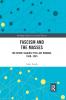
<p>Highlighting the mass nature of interwar European fascism has long become commonplace. Throughout the years numerous critics have construed fascism as a phenomenon of mass society perhaps the ultimate expression of mass politics. This study deconstructs this long-standing perception. It argues that the entwining of fascism with the masses is a remarkable transubstantiation of a movement which understood and presented itself as a militant rejection of the ideal of mass politics and indeed of mass society and mass culture more broadly conceived. Thus rather than massifying society fascism was the culmination of a long effort on the part of the élites and the middle-classes to de-massify it. The perennially menacing mass – seen as plebeian and insubordinate – was to be drilled into submission replaced by supposedly superior collective entities such as the nation the race or the people. Focusing on Italian fascism and German National Socialism but consulting fascist movements and individuals elsewhere in interwar Europe the book incisively shows how fascism is best understood as ferociously resisting what Elias referred to as the civilizing process and what Marx termed the social individual. Fascism notably was a revolt against what Nietzsche described as the peaceful middling and egalitarian Last Humans.</p>

Piracy-free

Assured Quality

Secure Transactions

Fast Delivery

Sustainably Printed
Details
ISBN 13
9780367893064
Publication Date
-17-12-2019
Pages
-444
Weight
-597 grams
Dimensions
-151.89x229.11x23.41 mm
