

English


Hardback
₹4124
₹5009
17.67% OFF
(All inclusive*)
Delivery Options
Please enter pincode to check delivery time.
*COD & Shipping Charges may apply on certain items.
Review final details at checkout.
Looking to place a bulk order? SUBMIT DETAILS
Delivery Options
Please enter pincode to check delivery time.
*COD & Shipping Charges may apply on certain items.
Review final details at checkout.
About The Book
Description
Author
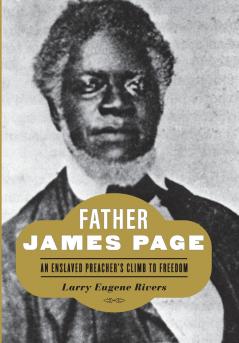
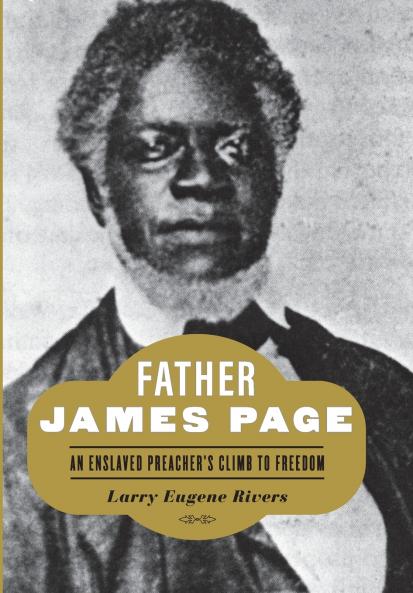
<p>James Page spent the majority of his life enslaved--during which time he experienced the death of his free father witnessed his mother and brother being sold on the auction block and was forcibly moved 700 miles south from Richmond VA to Tallahassee FL by his enslaver John Parkhill. Page would go on to become Parkhill's chief aide on his plantation and unusually a religious leader who was widely respected by enslaved men and women as well as by white clergy educators and politicians. Rare for enslaved people at the time Page was literate--and left behind ten letters that focused on his philosophy as an enslaved preacher and later as a free minister educator politician and social justice advocate. </p><p>In <i>Father James Page</i> Larry Eugene Rivers presents Page as a complex conflicted man: neither a nonthreatening accommodationist mouthpiece for white supremacy nor a calculating schemer fomenting rebellion. Rivers emphasizes Page's agency in pursuing a religious vocation in seeking to exhibit manliness in the face of chattel slavery and in pushing back against the overwhelming power of his enslaver. Post-emancipation Page continued to preach and to advocate for black self-determination and independence through black land ownership political participation and business ownership. The church he founded--Bethel Missionary Baptist Church in Tallahassee--would go on to be a major political force not only during Reconstruction but through today. </p><p>Based upon numerous archival sources and personal papers as well as an in-depth interview of James Page and a reflection on his life by a contemporary this deeply researched book brings to light a fascinating life filled with contradictions concerning gender education and the social interaction between the races. Rivers' biography of Page is an important addition and corrective to our understanding of black spirituality and religion political organizing and civic engagement.</p>

Piracy-free

Assured Quality

Secure Transactions

Fast Delivery

Sustainably Printed
Details
ISBN 13
9781421440309
Publication Date
-01-02-2021
Pages
-330
Weight
-536 grams
Dimensions
-152x229x22.23 mm
