


English


Hardback
₹13138
₹17424
24.6% OFF
(All inclusive*)
Delivery Options
Please enter pincode to check delivery time.
*COD & Shipping Charges may apply on certain items.
Review final details at checkout.
Looking to place a bulk order? SUBMIT DETAILS
Delivery Options
Please enter pincode to check delivery time.
*COD & Shipping Charges may apply on certain items.
Review final details at checkout.
About The Book
Description
Author(s)
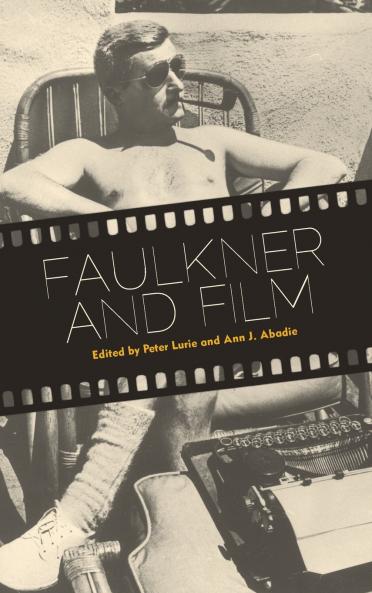
Considering that he worked a stint as a screenwriter it will come as littlesurprise that Faulkner has often been called the most cinematic of novelists.Faulkner's novels were produced in the same high period as the films ofclassical Hollywood a reason itself for considering his work alongside thisdominant form. Beyond their era though Faulkner's novels-or the ways inwhich they ask readers to see as well as feel his world-have much in commonwith film. That Faulkner was aware of film and that his novels' own thinkingbetrays his profound sense of the medium and its effects broadens the contextsin which he can be considered.In a range of approaches the contributors consider Faulkner's career as ascenarist and collaborator in Hollywood the ways his screenplay work andthe adaptations of his fiction informed his literary writing and how Faulkner'scraft anticipates intersects with or reflects upon changes in cultural historyacross the lifespan of cinema.Drawing on film history critical theory archival studies of Faulkner's screenplaysand scholarship about his work in Hollywood the nine essays show akeen awareness of literary modernism and its relation to film.Peter Lurie is associate professor of English and film studies at the Universityof Richmond. He is the author of Vision's Immanence: Faulkner Film and thePopular Imagination and has published numerous articles on Faulkner andfilm.Ann J. Abadie is associate director emerita of the Center for the Study ofSouthern Culture at the University of Mississippi and the coeditor of numerousvolumes in the Faulkner and Yoknapatawpha Series.

Piracy-free

Assured Quality

Secure Transactions

Fast Delivery

Sustainably Printed
Details
ISBN 13
9781628461015
Publication Date
-14-08-2014
Pages
-268
Weight
-455 grams
Dimensions
-152x229x19.05 mm
