

English


Hardback
₹8415
₹10790
22.01% OFF
(All inclusive*)
Delivery Options
Please enter pincode to check delivery time.
*COD & Shipping Charges may apply on certain items.
Review final details at checkout.
Looking to place a bulk order? SUBMIT DETAILS

Piracy-free

Assured Quality

Secure Transactions
About The Book
Description
Author(s)
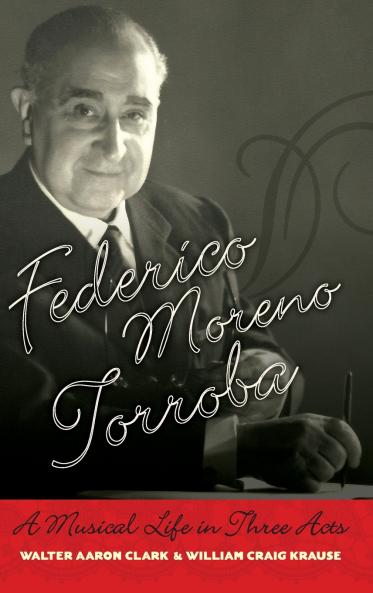
The last of the Spanish Romantics composer conductor and impresario Federico Moreno Torroba (1891-1982) left his mark on virtually every aspect of Spanish musical culture during a career which spanned six decades and saw tremendous political and cultural upheavals. After Falla he was the most important and influential musician: in addition to his creative activities he was President of the General Society of Authors and Editors and director of the Academy of Fine Arts and Teatro Zarzuela. His enduring contributions as a composer include copious amounts of guitar music composed for Andres Segovia and several highly successful zarzuelas which remain in the repertoire today. Written by two leading experts in the field Federico Moreno Torroba: A Musical Life in Three Acts explores not only his life and work but also the relationship of his music to the cultural milieu in which he moved. It sheds particular light on the relationship of Torroba''s music and the cultural politics of Francisco Franco''s dictatorship (1939-75). Torroba came of age in a cultural renaissance that sought to reassert Spain''s position as a unique cultural entity and authors Walter A. Clark and William Krause demonstrate how his work can be understood as a personal musical response to these aspirations. Clark and Krause argue that Torroba''s decision to remain in Spain even during the years of Franco''s dictatorship was based primarily not on political ideology but rather on an unwillingness to leave his native soil. Rather than abandon Spain to participate in the dynamic musical life abroad he continued to compose music that reflected his conservative view of his national and personal heritage. The authors contend that this pursuit did not necessitate allegiance to a particular regime but rather to the non-political exaltation of Spain''s so-called ''eternal tradition'' or the culture and spirit that had endured throughout Spain''s turbulent history.Following Franco''s death in 1975 there was ambivalence towards figures like Torroba who had made their peace with the dictatorship and paid a heavy price in terms of their reputation among expatriates. Moreover his very conservative musical style made him a target for the post-war avant-garde which disdained his highly tonal and melodic españolismo. With the demise of high modernism however the time has come for this new more distanced assessment of Torroba''s contributions. Richly illustrated with figures and music examples and with a helpful discography for reference this biography brings a fresh perspective on this influential composer to Latin American and Iberian music scholars performers and lovers of Spanish music alike.
Piracy-free
Assured Quality
Secure Transactions
Delivery Options
Please enter pincode to check delivery time.
*COD & Shipping Charges may apply on certain items.
Review final details at checkout.
Details
ISBN 13
9780195313703
Publication Date
-10-05-2013
Pages
-398
Weight
-656 grams
Dimensions
-156x234x25.4 mm
