




This Book is Out of Stock!
English



Hardback
₹15555
₹20472
24.02% OFF
(All inclusive*)
Delivery Options
*COD & Shipping Charges may apply on certain items.
Review final details at checkout.
Looking to place a bulk order? SUBMIT DETAILS

Piracy-free

Assured Quality

Secure Transactions
About The Book
Description
Author
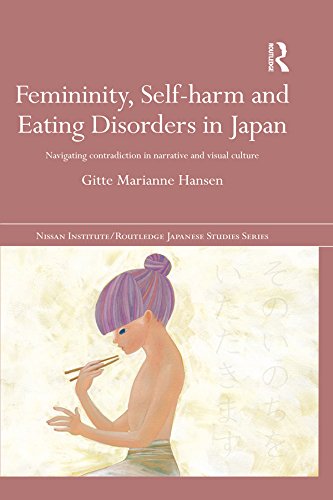
<p>From the 1980s onwards the incidence of eating disorders and self-harm has increased among Japanese women who report receiving mixed messages about how to be women. Mirroring this women’s self-directed violence has increasingly been thematised in diverse Japanese narrative and visual culture.</p><p>This book examines the relationship between normative femininity and women’s self-directed violence in contemporary Japanese culture. To theoretically define the complexities that constitute normativity the book develops the concept of ‘contradictive femininity’ and shows how in Japanese culture women’s paradoxical roles are thematised through three character construction techniques broadly derived from the doppelgänger motif. It then demonstrates how eating disorders and self-harm are included in normative femininity and suggests that such self-directed violence can be interpreted as coping strategies to overcome feelings of fragmentation related to contradictive femininity. Looking at novels artwork manga anime TV dramas and news stories the book analyses both globally well known Japanese culture such as Murakami Haruki’s literary works and Miyazaki Hayao’s animation as well as culture unavailable to non-Japanese readers. The aim of juxtaposing such diverse narrative and visual culture is to map common storylines and thematisation techniques about normative femininity self-harm and eating disorders. Furthermore it shows how women’s private struggles with their own bodies have become public discourse available for consumption as entertainment and lifestyle products.</p><p>Highly interdisciplinary it will be of huge interest to students and scholars of Japanese studies Japanese culture and society and gender and women's studies as well as to academics and consumers of Japanese literature manga and animation.</p>
Piracy-free
Assured Quality
Secure Transactions
*COD & Shipping Charges may apply on certain items.
Review final details at checkout.
₹15555
₹20472
24% OFF
Hardback
Out Of Stock
All inclusive*
Details
ISBN 13
9781138905306
Publication Date
-16-12-2015
Pages
-224
Weight
-417 grams
Dimensions
-156x234x13.51 mm
