

English


Paperback
₹1824
(All inclusive*)
Delivery Options
Please enter pincode to check delivery time.
*COD & Shipping Charges may apply on certain items.
Review final details at checkout.
Looking to place a bulk order? SUBMIT DETAILS

Piracy-free

Assured Quality

Secure Transactions
About The Book
Description
Author
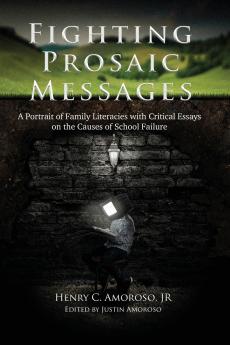
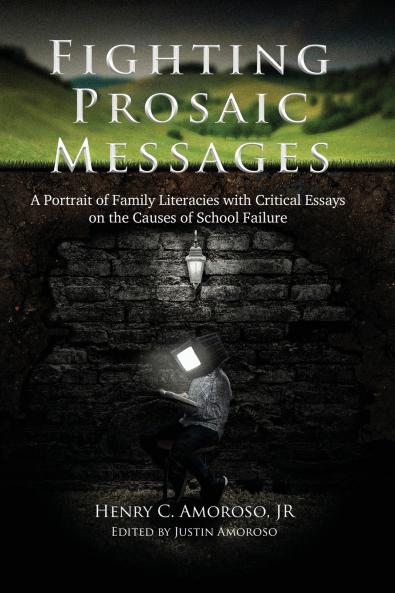
<p class=ql-align-justify><span style=color: rgba(0 0 0 1)>Part historical fiction part memoir part philosophy of education this book begins with a story about a woman's immigration into the U.S. and how three of her generations struggled in the U.S. school system. The book ends with an analysis of why many students fail in school and what we can do about it. Through story and analysis this book offers a critique of the U.S. education system-in 3 parts.</span></p><p class=ql-align-justify><span style=color: rgba(0 0 0 1)>Part one imagines what the immigration experience was like in the past and reads like historical fiction. Part two looks at the ensuing three generations in the present and reads like a memoir. Part three gleans lessons from the story as a whole for what we can do better in the future.</span></p><p class=ql-align-justify>In the historical fiction part a Sicilian woman named Rose emigrates to the U.S. at the turn of the twentieth century. Knowing no English and illiterate but armed with a moral intelligence she struggles in this strange world of the free rubs shoulders with some of the great thinkers of her day and discusses the nature of <span style=color: rgba(0 0 0 1)>education with them. She's one of the many prosaic heroes history books and schools sometimes forget.</span></p><p class=ql-align-justify><span style=color: rgba(0 0 0 1)>In the memoir part Rose's son Henry the author's father drops out of school in the eighth grade to help his single mom by selling newspapers-he never thought he was smart enough for school anyway. His son Henry Jr. goes all the way in school to obtain a PhD but struggles to find a voice along the way. Henry Jr.'s son Justin was seemingly born with an expressive voice but in his shuffle to conform to the school system almost lost it. In these 3 cases we see 3 types of students who often fail in school in general.</span></p><p class=ql-align-justify><span style=color: rgba(0 0 0 1)>In the final analysis part the book reflects on these prosaic cases to understand why so many U.S. students fail. The theme that emerges parallels the traditions of Rousseau Dewey and Montessori: students at heart are good and educators are most effective when they treat them as such; students learn best by doing and this includes moral doing; and students become intrinsically motivated to learn if allowed to think critically creatively and to find their voices.</span></p><p>If democracy depends on an informed citizenry the questions this book raises about school failure are critical to the future of our nation . J.A. </p>
Piracy-free
Assured Quality
Secure Transactions
Delivery Options
Please enter pincode to check delivery time.
*COD & Shipping Charges may apply on certain items.
Review final details at checkout.
Details
ISBN 13
9798896330387
Publication Date
-07-06-2025
Pages
-700
Weight
-932 grams
Dimensions
-152x229x39.06 mm
