

English


Hardback
₹12156
(All inclusive*)
Delivery Options
Please enter pincode to check delivery time.
*COD & Shipping Charges may apply on certain items.
Review final details at checkout.
Looking to place a bulk order? SUBMIT DETAILS
Delivery Options
Please enter pincode to check delivery time.
*COD & Shipping Charges may apply on certain items.
Review final details at checkout.
About The Book
Description
Author
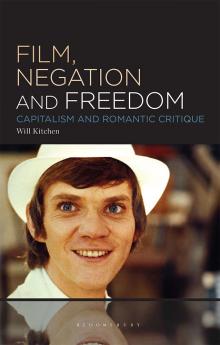
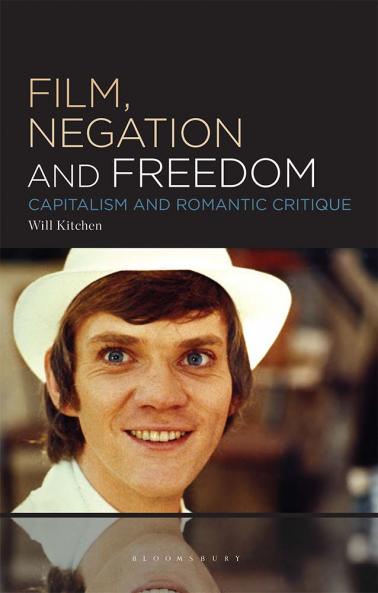
<b><i>Film Negation and Freedom: Capitalism and Romantic Critique</i> explores cinema in relation to the critical tradition in modern philosophy and its heritage in Romantic aesthetics.</b><br/><br/>Synthesising a variety of discursive fields and traditions - including Early German Romanticism Frankfurt School critical theory and the aesthetic philosophy of Jacques Rancière - <i>Film Negation and Freedom</i> outlines a radical new approach to film by re-examining the work of Arthur Penn and Lindsay Anderson. A distinction between Light and Dark Romanticism is introduced as a means of interpreting cinema's relationship with capitalism as well as dualistic concepts such as stillness and motion passivity and activity pain and pleasure. <i>Film Negation and Freedom</i> revitalises our understanding of modern audio-visual media as well as the aesthetic philosophical and political conditions of Romantic subjectivity artistic practice and spectatorship.

Piracy-free

Assured Quality

Secure Transactions

Fast Delivery

Sustainably Printed
Details
ISBN 13
9798765105535
Publication Date
-16-11-2023
Pages
-266
Weight
-453 grams
Dimensions
-152.4x228.6x15.67 mm
