

English


Hardback
₹4988
₹5326
6.35% OFF
(All inclusive*)
Delivery Options
Please enter pincode to check delivery time.
*COD & Shipping Charges may apply on certain items.
Review final details at checkout.
Looking to place a bulk order? SUBMIT DETAILS
Delivery Options
Please enter pincode to check delivery time.
*COD & Shipping Charges may apply on certain items.
Review final details at checkout.
About The Book
Description
Author
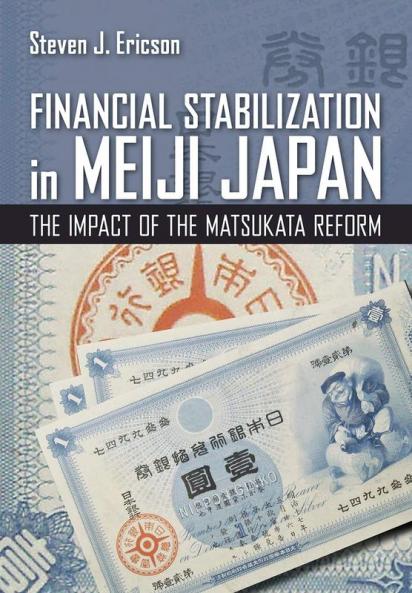
<p>With a new look at the 1880s financial reforms in Japan Steven J. Ericson&#39;s <em>Financial Stabilization in Meiji Japan </em>overturns widely held views of the program carried out by Finance Minister Matsukata Masayoshi. As Ericson shows rather than constituting an orthodox financial-stabilization program--a sort of precursor of the &quot;neoliberal&quot; reforms promoted by the IMF in the 1980s and 1990s--Matsukata&#39;s policies differed in significant ways from both classical economic liberalism and neoliberal orthodoxy.</p><p>The Matsukata financial reform has become famous largely for the wrong reasons and Ericson sets the record straight. He shows that Matsukata intended to pursue fiscal retrenchment and budget-balancing when he became finance minister in late 1881. Various exigencies including foreign military crises and a worsening domestic depression compelled him instead to<em> increase </em>spending by running deficits and floating public bonds. Though he drastically reduced the money supply he combined the positive and contractionary policies of his immediate predecessors to pull off a program of &quot;expansionary austerity&quot; paralleling state responses to financial crisis elsewhere in the world both then and now.</p><p>Through a new and much-needed recalibration of this pivotal financial reform <em>Financial Stabilization in Meiji Japan</em> demonstrates that in several ways ranging from state-led export promotion to the creation of a government-controlled central bank Matsukata advanced policies that were more in line with a nationalist developmentalist approach than with a liberal economic one. Ericson shows that Matsukata Masayoshi was far from a rigid adherent of classical economic liberalism.</p>

Piracy-free

Assured Quality

Secure Transactions

Fast Delivery

Sustainably Printed
Details
ISBN 13
9781501746918
Publication Date
-01-02-2020
Pages
-212
Weight
-382 grams
Dimensions
-152x229x15.88 mm
