



₹1607
₹1727
6.95% OFF
(All inclusive*)
Paperback
Delivery Options
Please enter pincode to check delivery time.
*COD & Shipping Charges may apply on certain items.
Review final details at checkout.
Looking to place a bulk order? SUBMIT DETAILS
Delivery Options
Please enter pincode to check delivery time.
*COD & Shipping Charges may apply on certain items.
Review final details at checkout.
About The Book
Description
Author(s)
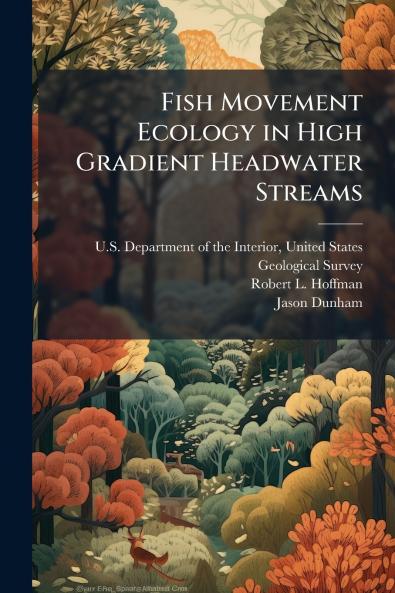
<p>Restoration of fish passage through culvert barriers has emerged as a major issue in the Pacific Northwest and nationwide. The problem has many dimensions including the huge number of potential barriers uncertainty about which structures are actually barriers the benefits and risks involved with restoration and the financial costs and timelines. This report attempts to address what we call 'thinking outside of the pipe' in terms of fish passage information needs. This means understanding the value of each potential passage restoration project in the context of other possible projects and to view individual restoration projects within a larger landscape of habitats and population processes. In this report we provide a brief review of some essential characteristics of animal movement and examples from a focal group of fishes in Washington State: salmon trout and char. While several other fishes and many other species use streams where culvert passage barriers may occur it is the salmonids that are by far the most widespread and in most cases extending furthest into the headwaters of stream networks in Washington. We begin this report by outlining some basic characteristics of animal movement and then apply that foundation to the case of salmonid fishes. Next we consider the consequences of disrupting fish movement with human-constructed barriers such as culverts. Finally this body of evidence is summarized and we propose a short list of what we view as high priority information needs to support more effective restoration of fish passage through culverts.</p><p>This work has been selected by scholars as being culturally important and is part of the knowledge base of civilization as we know it. This work was reproduced from the original artifact and remains as true to the original work as possible. Therefore you will see the original copyright references library stamps (as most of these works have been housed in our most important libraries around the world) and other notations in the work.</p><p>This work is in the public domain in the United States of America and possibly other nations. Within the United States you may freely copy and distribute this work as no entity (individual or corporate) has a copyright on the body of the work.</p><p>As a reproduction of a historical artifact this work may contain missing or blurred pages poor pictures errant marks etc. Scholars believe and we concur that this work is important enough to be preserved reproduced and made generally available to the public. We appreciate your support of the preservation process and thank you for being an important part of keeping this knowledge alive and relevant.</p>

Piracy-free

Assured Quality

Secure Transactions

Fast Delivery

Sustainably Printed
Details
ISBN 13
9781297052217
Publication Date
-16-02-2015
Pages
-42
Weight
-76 grams
Dimensions
-156x234x2.86 mm
