

English


Paperback
₹9524
₹11869
19.76% OFF
(All inclusive*)
Delivery Options
Please enter pincode to check delivery time.
*COD & Shipping Charges may apply on certain items.
Review final details at checkout.
Looking to place a bulk order? SUBMIT DETAILS

Piracy-free

Assured Quality

Secure Transactions
About The Book
Description
Author
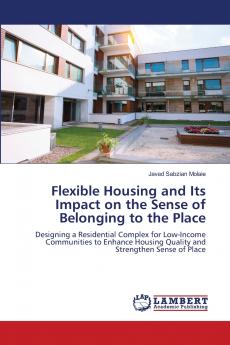
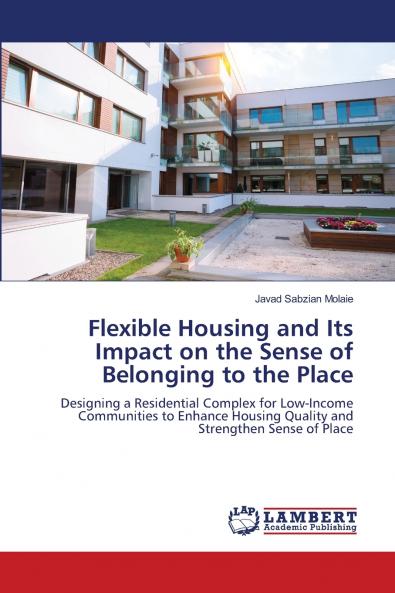
This book explores the relationship between flexibility in residential design and the sense of belonging to a place recognizing the distinction between mere habitation and a true home. It argues that a lack of adaptability in housing design diminishes quality satisfaction and emotional attachment often leading to instability and premature abandonment. Through a comprehensive literature review a framework was developed identifying 21 key components of flexibility and 27 factors influencing place attachment. Using the Delphi technique expert assessments were conducted and analyzed. Findings indicate that multifunctional spaces convertible furniture and adaptable layouts significantly enhance flexibility while comfort spatial familiarity satisfaction and ownership are critical for fostering belonging. This book further establishes correlations between these factors leading to the design of a flexible residential complex for low-income communities. By integrating adaptable housing solutions this book proposes a scalable model to enhance residential quality and strengthen emotional connections between occupants and their living spaces.
Piracy-free
Assured Quality
Secure Transactions
Delivery Options
Please enter pincode to check delivery time.
*COD & Shipping Charges may apply on certain items.
Review final details at checkout.
Details
ISBN 13
9786208440602
Publication Date
-10-04-2025
Pages
-192
Weight
-268 grams
Dimensions
-152x229x11.2 mm
