

Chinese


Paperback
₹2286
(All inclusive*)
Delivery Options
Please enter pincode to check delivery time.
*COD & Shipping Charges may apply on certain items.
Review final details at checkout.
Looking to place a bulk order? SUBMIT DETAILS
Delivery Options
Please enter pincode to check delivery time.
*COD & Shipping Charges may apply on certain items.
Review final details at checkout.
About The Book
Description
Author
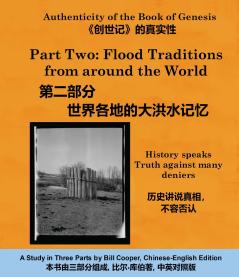
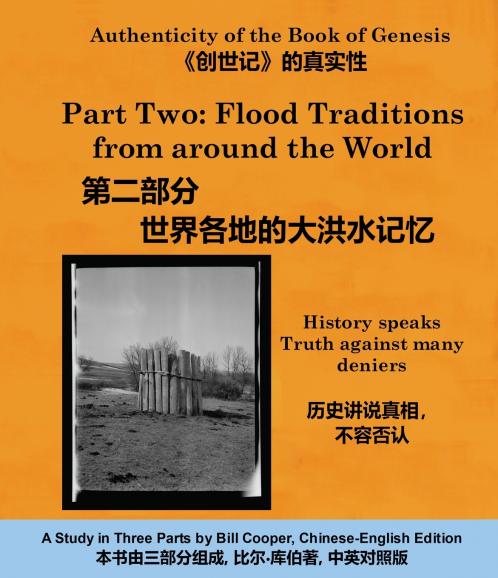
<p>In Part Two Dr. Cooper brings us oral traditions of the Flood from around the earth. As expected there are many varying time-dimmed details but the main point is NEVER missed: there most certainly <u>was</u> a world-sized flood event in which all persons on earth died except a few preserved in a big vessel of some kind.</p><p></p><p>One unforgettable tradition comes from the Mandan native peoples of North Dakota USA. A Mandan annual custom was the Buffalo Dance around a bound pillar of wood pieces (the Big Canoe representing the ark?). The ceremony was performed so God would not bring another great Flood. The 1932 photo of a remnant Big Canoe is seen on the Part Two front cover (image credit State Historical Society of North Dakota). American artist George Catlin painted the ceremony in North Dakota in 1832 shown on the back cover of the book.Crowning the world's massive collection of cultural Flood stories is the statement by George Catlin that ... amongst one hundred and twenty different tribes that I visited in North and South and Central America not a tribe exists that has not related to me distinct or vague traditions of such a [Flood] calamity in which one or three or eight persons were saved above the waters on the top of a high mountain.</p><p class=ql-align-justify></p><p class=ql-align-justify><strong>One special example </strong>every parent or teacher telling children the story of the great Flood of Noah should learn from Part Two: one aboriginal people of Australia repeated from one generation to the next that (Noah) fell in the water as he was getting out of the ark then Mrs. Noah cooked a kangaroo. After reading this dream time memory your child will not likely forget - nor will you.</p><p class=ql-align-justify></p><p>在《第二部分》,库伯博士为我们展现了世界各地对大洪水的口述记忆。正如人们所预料的那样,这些口述记忆包含了许多不同程度的因时间流逝而模糊的细节,但一个从未丢掉的重点却是:肯定发生了一场世界级的洪水事件--地球上很多人丧失其中,只有几个人因搭乘某种巨大容器而存活。</p><p></p><p>一个令人印象深刻的大洪水叙事来自美国北达科他州的曼丹人。曼丹人每年有一个传统,他们会围绕一捆木头(大舟,指代挪亚方舟?)跳公牛舞。这项仪式是为了让上帝不要再发起另一场大洪水。在《第二部分》的封面就有一张1932年拍摄的大舟遗迹(版权:北达科他州历史学会)。美国艺术家乔治·卡特林在1832年将这种仪式画了下来,本书封底印有此图。乔治·卡特林的一段陈词,是对世界各地出现如此众多大洪水叙事的最佳总结:......在我曾访问过的南美、北美和中美洲的一百二十个不同部落中,毫无例外,每一个都向我讲述一场与[大洪水]灾难有关的事件,虽然有的描述清晰明确,有的模糊晦涩。在那场洪水中,有一个或两个,或八个人在洪水中通过去到高高的山顶而幸免于难。</p><p></p><p>每一个给孩子讲述挪亚洪水的家长或老师,都应该从《第二部分》了解到一个很特别的记录--澳大利亚的一个原住民族,一代又一代讲述一个故事:(挪亚)正要从方舟出来的时候掉在了水里,然后挪亚夫人烹煮了一只袋鼠。你的孩子将对这段梦幻时期的大洪水叙事难以忘怀。你也会。</p>

Piracy-free

Assured Quality

Secure Transactions

Fast Delivery

Sustainably Printed
Details
ISBN 13
9798349679049
Publication Date
-08-11-2025
Pages
-330
Weight
-582 grams
Dimensions
-197x229x17.5 mm
