



This Book is Out of Stock!
English




Paperback
₹29428
(All inclusive*)
Delivery Options
*COD & Shipping Charges may apply on certain items.
Review final details at checkout.
Looking to place a bulk order? SUBMIT DETAILS
*COD & Shipping Charges may apply on certain items.
Review final details at checkout.
₹29428
Out Of Stock
All inclusive*
About The Book
Description
Author(s)
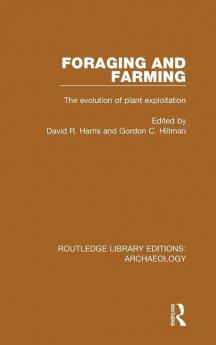
<p>This book is one of a series of more than 20 volumes resulting from the World Archaeological Congress, September 1986, attempting to bring together not only archaeologists and anthropologists from many parts of the world, as well as academics from contingent disciplines, but also non-academics from a wide range of cultural backgrounds. This volume develops a new approach to plant exploitation and early agriculture in a worldwide comparative context. It modifies the conceptual dichotomy between "hunter-gatherers" and "farmers", viewing human exploitation of plant resources as a global evolutionary process which incorporated the beginnings of cultivation and crop domestication. The studies throughout the book come from a worldwide range of geographical contexts, from the Andes to China and from Australia to the Upper Mid-West of North America. This work is of interest to anthropologists, archaeologists, botanists and geographers. Originally published 1989.</p> <p>Foreword <i>P.J. Ucko</i> Preface. Introduction <b>Part 1: The Evolution of Plant Exploitation: Concepts and Processes</b> 1. An Evolutionary Continuum of People-plant Interaction <i>D.R. Harris </i>2. Darwinism and its Role in the Explanation of Domestication <i>D. Rindos</i> 3. Domestication and Domiculture in Northern Australia: A Social Perspective <i>A.K. Chase</i> 4. The Domestication of Environment <i>D.E. Yen</i> <b>Part 2: Plant Exploitation in Non-agrarian Contexts: The Ethnographic Witness </b>5. Wild-grass Seed Harvesting in the Sahara and Sub-Sahara of Africa <i>J.R. Harlan</i> 6. Australian Aboriginal Seed Grinding and its Archaeological Record: A Case Study from the Western Desert <i>S. Cane</i> 7. Plant Foods of the Gidjingali: Ethnographic and Archaeological Perspectives from Northern Australia on Tuber and Seed Exploitation <i>R. Jones and B. Meehan</i> 8. Plant Usage and Management in Southwest Australian Aboriginal Societies <i>S.J. Hallamm</i> 9. Ethnoecological Observations on Wild and Cultivated Rice and Yams in Northeastern Thailand, <i>J.C. White</i> 10. An Example of Intensive Plant Husbandry: The Kumeyaay of Southern California <i>F.C. Shipek</i> 11. Plant-food Processing: Implications for Dietary Quality <i>A.B. Stahl</i> <b>Part 3: Plant Exploitation in Per-agrarian Contexts: The Archaeological Evidence</b> 12. Plant Exploitation at Grotta dell'Uzzo, Sicily: New Evidence for the Transition from Mesolithic to Neolithic Subsistence in Southern Europe <i>L. Constantini</i> 13. Late Palaeolithic Plant Foods from Wadi Kubbaniya in Upper Egypt: Dietary Diversity, Infant Weaning and Seasonality in a Riverine Environment <i>G.C. Hillman</i> 14. Plant-food Economy During the Epipalaeolithic Period at Tell Abu Hureyra, Syria: Dietary Diversity, Seasonality and Modes of Exploitation <i>G.C. Hillman et al</i> 15. Mesolithic Exploitation of Wild Plants in Sri Lanka: Achaeobotanical Study at the Cave Site of Beli-Lena <i>M.D. Kajale</i> 16. New Evidence on Plant Exploitation and Environment During the Hoabinhian (Late Stone Age) from Ban Kao Caves, Thailand <i>K. Pyramarn</i> 17. The Taming of the Rain Forests: A Model for Late Pleistocene Forest Exploitation in New Guinea <i>L. Groube</i> 18. Seed Gathering in Inland Australia: Current Evidence from Seed-grinders on the Antiquity of the Ethnohistorical Pattern of Exploitation <i>M.A. Smith</i> 19. Adaptation of Prehistoric Hunter-gatherers to the High Andes: The Changing Role of Plant Resources <i>D.M. Pearsall</i> <b>Part 4: Agrarian Plant Exploitation: The Domestication and Diffusion of Crops and Crop Assemblages</b> 20. The Tropical African Cereals <i>J.R. Harlan</i> 21. Factors Responsible for the Ennoblement of African Yams: Inferences from Experiments in Yam Domestication <i>V.E. Chikwendu and C.E.A. Okezie </i>22. Domestication of the Southwest Asian Neolithic Crop Assemblage of Cereals, Pulses and Flax: The Evidence from Living Plants <i>D. Zohary</i> 23. Origin and Domestication of the Southwest Asian Grain Legumes <i>G. Ladizinsky</i> 24. Cryptic Anatomical Characters as Evidence of Early Cultivation in the Grain Legumes (Pulses) <i>A. Butler</i> 25. Domestication and the Spread of the Cultivated Rices <i>T.T. Chang</i> 26. Crops of the Pacific: New Evidence from the Chemical Analysis of Organic Residues in Pottery <i>H.E. Hill &amp; J. Evans</i> 27. Cytological and Genetical Evidence on the Domestication and Diffusion of Crops within the Americas <i>B. Pickersgill</i> 28. Maize: Domestication, Racial Evolution, and Spread <i>G. Wilkes </i>29. Andean Maize: Its Origins and Domestication <i>D. Bonavia &amp; A. Grobman</i> 30. Domestication of Cucurbitaceae: Cucurbita and Lagenaria <i>C.B. Heiser, Jr.</i> 31. The Domestication of Roots and Tubers in the American Tropics <i>J.G. Hawkes</i> 32. A Chemical-ecological Model of Root and Tuber Domestication in the Andes <i>T. Johns</i> <b>Part 5: Agrarian Plant Exploitation: The Evolution of Agricultural Systems</b> 33. From Foraging to Food Production in North-eastern Venezuela and the Caribbean <i>M. Sanoja</i> 34. Non-affluent Foragers: Resource Availability, Seasonal Shortages and the Emergence of Agriculture in Panamanian Tropical Forests <i>D.R. Piperno</i> 35. Early Plant Cultivation in the Eastern Woodlands of North America <i>P.J. Watson</i> 36. Agricultural Intensification and Ridged-field Cultivation in the Prehistoric Upper Midwest of North America <i>J.P. Gallagher</i> 37. The Spread of Agriculture in Western Europe: Indo-European and (Non-)Pre-Indo-European Linguistic Evidence <i>T.L. Markey</i> 38. Agricultural Evolution North of the Black Sea from the Neolithic to the Iron Age <i>Z.V. Yanushevich</i> 39. The Transition from Foraging to Farming in Southwest Asia: Present Problems and Future Directions <i>A.M.T. Moore</i> 40. Early Farming Communities in the Jordan Valley <i>O. Bar-Yosef &amp; M.E. Kislev</i> 41. Prehistoric Agriculture in China <i>An Zhimin</i> 42. Coastal Adaptation, Sedentism, and Domestivation: A Model for Socio-economic Intensification in Prehistoric Southeast Asia <i>C. Higham &amp; B. Maloney</i> 43. The Transition from Stone to Steel in the Prehistoric Swidden Agricultural Technology of the Kantu’ of Kalimantan, Indonesia <i>M.R. Dove</i> 44. The Origins and Development of New Guinea Agriculture <i>J. Golson</i> 45. Gardens in the South: Diversity and Change in Prehistoric Maori Agriculture <i>S. Bulmer</i></p>

Piracy-free

Assured Quality

Secure Transactions

Fast Delivery

Sustainably Printed
Details
ISBN 13
9781138816015
Publication Date
-24-10-2014
Pages
-766
Weight
-1068 grams
Dimensions
-156x234x39.95 mm
