


English


Hardback
₹8310
(All inclusive*)
Delivery Options
Please enter pincode to check delivery time.
*COD & Shipping Charges may apply on certain items.
Review final details at checkout.
Looking to place a bulk order? SUBMIT DETAILS
Delivery Options
Please enter pincode to check delivery time.
*COD & Shipping Charges may apply on certain items.
Review final details at checkout.
About The Book
Description
Author
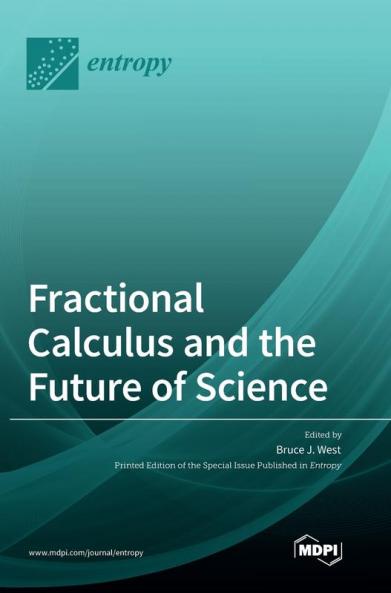
<p>Newton foresaw the limitations of geometry's description of planetary behavior and developed fluxions (differentials) as the new language for celestial mechanics and as the way to implement his laws of mechanics.&nbsp;Two hundred years later Mandelbrot introduced the notion of fractals into the scientific lexicon of geometry dynamics and statistics and in so doing suggested ways to see beyond the limitations of Newton's laws. Mandelbrot's mathematical essays suggest how fractals may lead to the understanding of turbulence viscoelasticity and ultimately to end of dominance of the Newton's macroscopic world view.</p><p> </p><p> Fractional Calculus and the Future of Science examines the nexus of these two game-changing contributions to our scientific understanding of the world. It addresses how non-integer differential equations replace Newton's laws to describe the many guises of complexity most of which lay beyond Newton's experience and many had even eluded Mandelbrot's powerful intuition. The book's authors look behind the mathematics and examine what must be true about a phenomenon's behavior to justify the replacement of an integer-order with a noninteger-order (fractional) derivative. This window into the future of specific science disciplines using the fractional calculus lens suggests how what is seen entails a difference in scientific thinking and understanding.</p>

Piracy-free

Assured Quality

Secure Transactions

Fast Delivery

Sustainably Printed
Details
ISBN 13
9783036528267
Publication Date
-22-04-2022
Pages
-312
Weight
-611 grams
Dimensions
-170x244x25.4 mm
