



English




₹1425
(All inclusive*)
Paperback
Delivery Options
Please enter pincode to check delivery time.
*COD & Shipping Charges may apply on certain items.
Review final details at checkout.
Looking to place a bulk order? SUBMIT DETAILS
Delivery Options
Please enter pincode to check delivery time.
*COD & Shipping Charges may apply on certain items.
Review final details at checkout.
About The Book
Description
Author
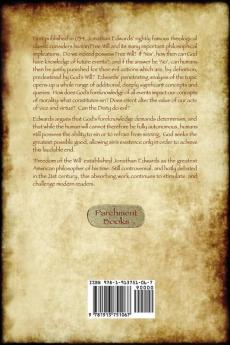
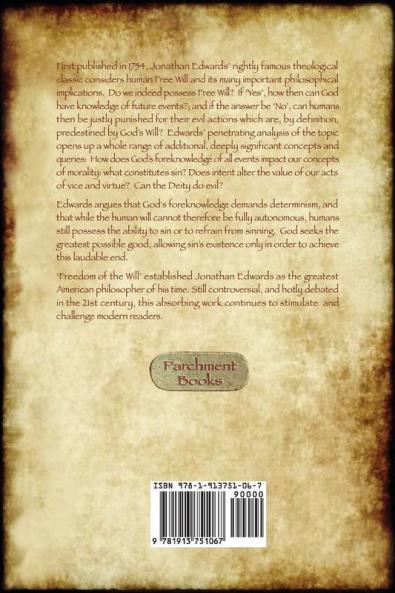
<p>First published in 1754 Jonathan Edwards' rightly famous theological classic considers human Free Will and its many important philosophical implications.&nbsp;Do we indeed possess Free Will?&nbsp;If 'Yes' how then can God have knowledge of future events?; and if the answer be 'No' can humans ever be justly punished for their evil actions which are by definition predestined by God's Will?&nbsp;Edwards' penetrating analysis of the topic opens up a whole range of additional deeply significant concepts and queries:&nbsp;How does God's foreknowledge of all events impact our concepts of morality: what constitutes sin? Does intent alter the value of our acts of vice and virtue?&nbsp;Can the Deity do evil?</p><p>&nbsp;&nbsp;&nbsp;&nbsp;</p><p>Edwards argues that God's foreknowledge demands determinism and that while the human will cannot therefore be fully autonomous humans still possess the ability to sin or to refrain from sinning.&nbsp;God seeks the greatest possible good allowing sin's existence only in order to achieve </p><p>this laudable end.</p><p>&nbsp;&nbsp;&nbsp;</p><p>&nbsp;'Freedom of the Will' established Jonathan Edwards as the greatest American philosopher of his time. Still controversial and hotly debated in the 21st century this absorbing work continues to stimulate&nbsp;and challenge modern readers.</p>

Piracy-free

Assured Quality

Secure Transactions

Fast Delivery

Sustainably Printed
Details
ISBN 13
9781913751067
Publication Date
-21-10-2020
Pages
-240
Weight
-331 grams
Dimensions
-152x229x12.83 mm
