


English



Paperback
₹3234
₹4167
22.39% OFF
(All inclusive*)
Delivery Options
Please enter pincode to check delivery time.
*COD & Shipping Charges may apply on certain items.
Review final details at checkout.
Looking to place a bulk order? SUBMIT DETAILS
Delivery Options
Please enter pincode to check delivery time.
*COD & Shipping Charges may apply on certain items.
Review final details at checkout.
About The Book
Description
Author(s)
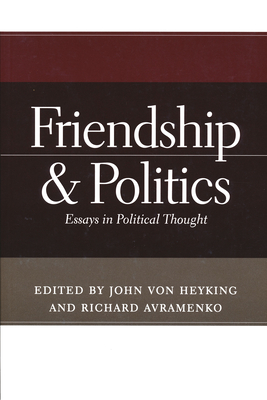
Throughout the history of Western political philosophy the idea of friendship has occupied a central place in the conversation. It is only in the context of the modern era that friendship has lost its prominence. By retrieving the concept of friendship for philosophical investigation these essays invite readers to consider how our political principles become manifest in our private lives. They provide a timely corrective to contemporary confusion plaguing this central experience of our public and our private life.This volume assembles essays by well-known scholars who address contemporary concerns about community in the context of philosophical ideas about friendship. Part One includes essays on ancient philosophers including Plato Aristotle and Cicero. Part Two considers treatments of friendship by Christian thinkers such as Augustine Aquinas Luther and Calvin and Part Three continues with Thomas Hobbes Montaigne the American founders and de Tocqueville. The volume concludes with two essays that address the postmodern emphasis on fragmentation and the dynamics of power within the modern state.Contributors: John von Heyking Richard Avramenko James M. Rhodes Stephen M. Salkever Walter Nicgorski Jeanne Heffernan Schindler Thomas Heilke Timothy Fuller Travis D. Smith George Carey Joshua Mitchell and Jürgen Gebhardt.

Piracy-free

Assured Quality

Secure Transactions

Fast Delivery

Sustainably Printed
Details
ISBN 13
9780268043704
Publication Date
-01-05-2008
Pages
-368
Weight
-498 grams
Dimensions
-152x229x19.36 mm
