






English






₹918
₹966
4.97% OFF
(All inclusive*)
Casing
Delivery Options
Please enter pincode to check delivery time.
*COD & Shipping Charges may apply on certain items.
Review final details at checkout.
Looking to place a bulk order? SUBMIT DETAILS
Delivery Options
Please enter pincode to check delivery time.
*COD & Shipping Charges may apply on certain items.
Review final details at checkout.
About The Book
Description
Author
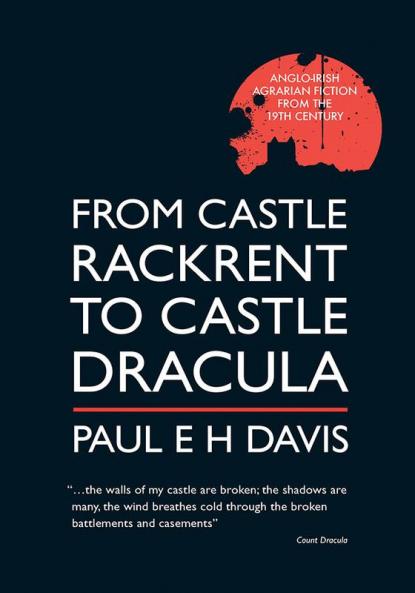
<p><strong><em>Paul E H Davis and the Irish Land Question</em></strong></p><p>In his challenging new book<strong>&nbsp;Paul E H Davis&nbsp;</strong>offers an entirely new critique of how novelists in nineteenth-century Ireland had to act -both as writers and historians - in their attempts to find a solution to what became the Irish Land Question.</p><p>Callenging the widely-held nationalist view that Irish novelists of this period had little or nothing to offer Davis slots these castaway novelists into a new identifiable category:<strong>&nbsp;the agrarian novelists.</strong></p><p>The book is divided into three parts.&nbsp;<em>Part One</em>&nbsp;considers novelists writing between the Union and the Famine:<strong>&nbsp;Maria Edgeworth Gerald Griffin John and Michael Banim</strong>&nbsp;and<strong>&nbsp;William Carleton.</strong>&nbsp;<em>Part Two</em>&nbsp;looks at how the agrarian novel &#39;emigrates&#39; with reference to the novels of&nbsp;<strong>Charles Kickham</strong>&nbsp;and to the Irish novels of&nbsp;<strong>Anthony Trollope.</strong>&nbsp;<em>Part Three</em>&nbsp;considers how some agrarian novelists - specifically&nbsp;<strong>Thomas Moore</strong>&nbsp;and&nbsp;<strong>Bram Stoker</strong>&nbsp;- felt the solution lay not in the real world but in the world of fantasy.</p><p>An exceptional book on why the agrarian novelists deserve to be valued for their unique perception of Ireland in the nineteenth century.</p>

Piracy-free

Assured Quality

Secure Transactions

Fast Delivery

Sustainably Printed
Details
ISBN 13
9780956071675
Publication Date
-27-05-2011
Pages
-360
Weight
-512 grams
Dimensions
-156x234x21.3 mm
