



English
SELECT FORMAT
Paperback
₹316
₹399
20.8% OFF




SELECT FORMAT
Paperback
₹316
₹399
20.8% OFF
Delivery Options
Please enter pincode to check delivery time.
*COD & Shipping Charges may apply on certain items.
Review final details at checkout.
Looking to place a bulk order? SUBMIT DETAILS
Delivery Options
Please enter pincode to check delivery time.
*COD & Shipping Charges may apply on certain items.
Review final details at checkout.
About The Book
Description
Author
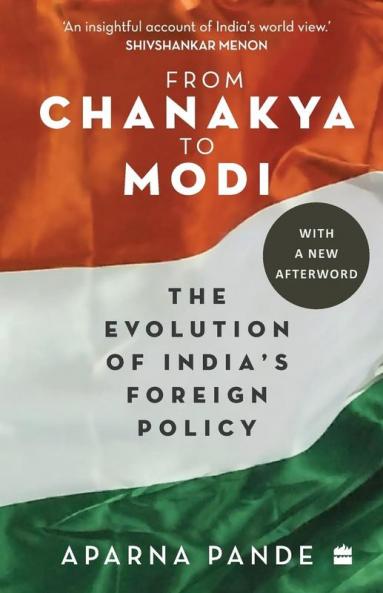
Foreign policy does not exist in a cultural vacuum. It is shaped by national experience and a country's view of itself. In the case of India the foreign policy paradigm is as deeply informed by its civilizational heritage as it is by modern ideas about national interest. </p>The two concepts that come and go most frequently in Indian engagement with the world -- from Chanakya in the third century BC to Prime Minister Narendra Modi in 2020 -- are autonomy and independence in decision-making. There are also four trends that we can trace: messianic idealism realism isolationism and imperial influences -- ideas that have competed with and complemented each other at various points in time.</p>As India pursues modernity and seeks to exercise influence in the contemporary world an examination of the nation in the context of its history and tradition is crucial. Aparna Pande's <i>From Chanakya to Modi</i> explores the deeper civilizational roots of Indian foreign policy in a manner reminiscent of Walter Russel Mead's groundbreaking <i>Special Providence</i> (2001). It identifies the neural roots of India's engagement with the world outside. An essential addition to every thinking person's library<b>.</p></b>

Piracy-free

Assured Quality

Secure Transactions
Details
ISBN 13
9789353579074
Publication Date
-13-08-2020
Pages
-238
Weight
-304 grams
Dimensions
-140x215x4.03 mm
Imprint
-HarperCollins Publishers India
