




This Book is Out of Stock!
English



Hardback
₹7116
₹8075
11.88% OFF
(All inclusive*)
Delivery Options
*COD & Shipping Charges may apply on certain items.
Review final details at checkout.
Looking to place a bulk order? SUBMIT DETAILS

Piracy-free

Assured Quality

Secure Transactions
About The Book
Description
Author
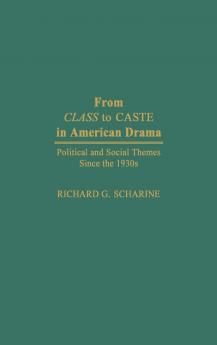
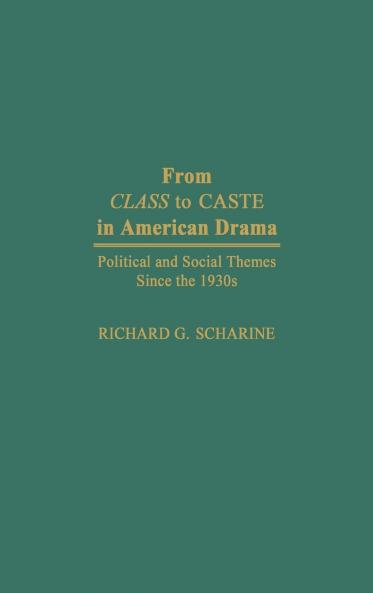
The American political theatre from the Depression to the present is the subject of this unique new study. Richard Scharine examines issues that shaped the development of the United States during this period as they were portrayed in selected American plays first produced between 1933 and 1985. Drawing upon fifty years of social political and theatrical history he provides an understanding of the events ideas and emotional matrices out of which the plays were born as well as offering an analysis of human documents that are a reflection of the political events of a time. Along the way Scharine illustrates how the dramatic representation of American inequalities has evolved in recent decades from the concerns of class to the way class is predetermined by caste.The work begins with an introductory essay that defines political theatre and shows how it varies from standard drama in plot structure character theme and expectations of its audience. The body of the book is then divided into seven historically labelled chapters each of which provides a history of the period in relation to an evolving principle; a detailed analysis of particular dramas that illustrate that evolution; and a suggestion of other plays in which the evolution can be further studied. The periods that make up the chapters are the Great Depression World War II the cold war Vietnam and the civil rights movement. The plays of each period are discussed with particular emphasis placed on their derivation from the assumptions about class and caste of the preceding era. Among the works analyzed are Waiting for Lefty Watch on the Rhine The Crucible The Trial of the Catonsville Nine In White America Black Elk Speaks and As Is. This work will be a valuable reference source for courses in American theatre history popular culture and women''s and ethnic studies and a welcome addition to college university and public libraries.
Piracy-free
Assured Quality
Secure Transactions
*COD & Shipping Charges may apply on certain items.
Review final details at checkout.
₹7116
₹8075
11% OFF
Hardback
Out Of Stock
All inclusive*
Details
ISBN 13
9780313267376
Publication Date
-21-03-1991
Pages
-334
Weight
-568 grams
Dimensions
-156x234x19.05 mm
