

English


Paperback
₹2366
₹2944
19.63% OFF
(All inclusive*)
Delivery Options
Please enter pincode to check delivery time.
*COD & Shipping Charges may apply on certain items.
Review final details at checkout.
Looking to place a bulk order? SUBMIT DETAILS
Delivery Options
Please enter pincode to check delivery time.
*COD & Shipping Charges may apply on certain items.
Review final details at checkout.
About The Book
Description
Author(s)
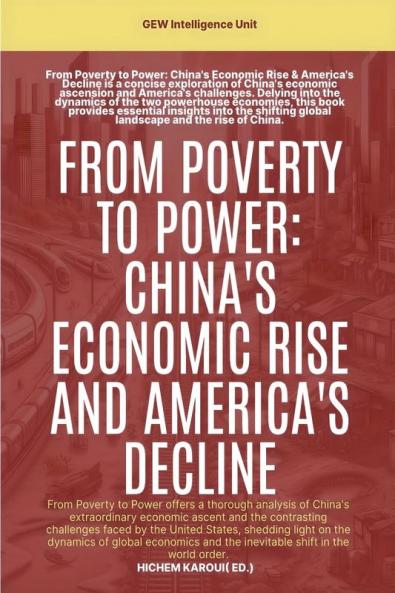
<p>From Poverty to Power provides a nuanced analysis of the economic rise of China and the decline of the United States including the impacts of BRICS corporate influence on economic policy sustainability challenges and the evolving global power dynamics. The main idea of the book is to provide an extensive comparison and analysis of China's economic rise and America's economic challenges. It discusses the historical context and drivers behind China's economic growth and poverty reduction emphasizing the role of government intervention and state capitalism. Conversely it examines the predominantly free-market approach of the U.S. economy and its navigation through crises like the 2008 financial meltdown. The book underlines the interdependence between the two economic giants exploring themes of economic efficiency debt dynamics governance and the socio-political influences on policy formulation. It underscores the importance of responsible governance innovation and strategic planning for the U.S. to address economic challenges and achieve long-term sustainability.</p><p> </p><p><strong>Key Takeaways</strong></p><ul><li>China's Economic Ascent: China's rapid economic growth driven by state-led initiatives and strategic planning has significantly altered global trade and investment patterns.</li><li>U.S. Economic Challenges: The United States faces formidable challenges including trade imbalances corporate influence on policy and sustainability issues amid China's rising influence.</li><li>BRICS Influence: The emerging power bloc of BRICS (Brazil Russia India China South Africa) is reshaping global economic governance and challenging Western dominance.</li><li>Corporate Power: Corporate lobbying and influence have a profound impact on U.S. economic policies often prioritizing corporate interests over public good.</li><li>Sustainability Issues: Both economic powerhouses face critical sustainability challenges requiring shifts towards renewable energy efficient resource use and equitable growth policies.</li><li>Global Power Shift: The shift from a unipolar to a multipolar world necessitates new strategies for international cooperation especially amidst China's rise and U.S. economic recalibration.</li><li>Future Prospects: Navigating these shifts effectively demands a nuanced understanding of the interconnected economic political and technological dynamics shaping the 21st-century global order.</li></ul>

Piracy-free

Assured Quality

Secure Transactions

Fast Delivery

Sustainably Printed
Details
ISBN 13
9798227484185
Publication Date
-28-05-2024
Pages
-248
Weight
-341 grams
Dimensions
-152x229x13.25 mm
