




This Book is Out of Stock!
English



Hardback
₹6879
₹8075
14.81% OFF
(All inclusive*)
Delivery Options
*COD & Shipping Charges may apply on certain items.
Review final details at checkout.
Looking to place a bulk order? SUBMIT DETAILS

Piracy-free

Assured Quality

Secure Transactions
About The Book
Description
Author
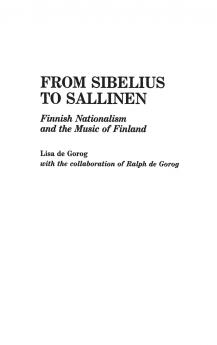
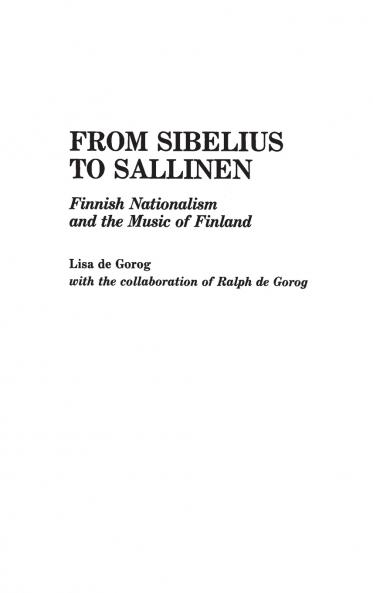
This comprehensive study of the evolution of Finnish art music from continental predecessors and native folk music traces the development of Sibelius''s musical language from his first major work Kullervo the first genuine Finnish recitative to the last tone poem Tapiola. De Gorog asserts the importance of En Saga Sibelius''s first major purely orchestral work as a composition that affirms the composer''s belief in both rhythm and in the variation method (the germ motif technique). The impact of folk music on the germ motif technique as well as on melody phrase construction and harmony are also analyzed. Although Sibelius''s use of rhythm was more restrained than that of Bartok Stravinsky or Prokofiev similarities in basic trends and folk music influences are noted by de Gorog. From Sibelius to Sallinen emphasizes the importance of various aspects of Finnish culture the historical events that shaped that culture and Finnish nationalism in the evolution of Finnish music in general. It also delineates the major sources of inspiration for Sibelius''s unique musical idiom. The volume clarifies Sibelius''s position as founder of Finnish art music and considers the evolution of trends established by him in the works of younger Finnish composers.The first three chapters provide an historical prism through which to view Finnish culture and music discuss Finnish music prior to Sibelius and relate Finnish nationalism to the composer''s philosophy and music. Chapters 4 through 7 focus on Sibelius his compositions and their lasting impact. Two final chapters address instrumental music after Sibelius and stage and vocal music in Finland. A discography provides ready access and full information on the works and completes the volume as an informative resource for students teachers researchers musicologists and performers as well as a valuable addition to university music libraries and conservatories.
Piracy-free
Assured Quality
Secure Transactions
*COD & Shipping Charges may apply on certain items.
Review final details at checkout.
₹6879
₹8075
14% OFF
Hardback
Out Of Stock
All inclusive*
Details
ISBN 13
9780313267406
Publication Date
-06-12-1989
Pages
-270
Weight
-480 grams
Dimensions
-156x234x15.88 mm
