


by
John Lok
English

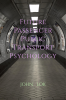


Paperback
₹424
₹555
23.6% OFF
(All inclusive*)
Delivery Options
Please enter pincode to check delivery time.
*COD & Shipping Charges may apply on certain items.
Review final details at checkout.
Looking to place a bulk order? SUBMIT DETAILS
Delivery Options
Please enter pincode to check delivery time.
*COD & Shipping Charges may apply on certain items.
Review final details at checkout.
About The Book
Description
Author
<p>My analysis of future transportation particularly in his work regarding passenger psychology and public transit posits that the invention of autonomous vehicles (AVs) acts as a catalyst for a fundamental shift in human behavioral patterns and economic structures.</p><p>My view argues that the transition from traditional internal combustion engine vehicles to autonomous electric systems is not merely a mechanical upgrade but a psychological and economic transformation that alters how individuals perceive mobility time and ownership.</p><p>By integrating the principles of behavioral economics my view suggests that the passenger need is redefined when the burden of operation is removed from the human driver. In this framework the vehicle evolves from a tool of manual transport into a mobile environment for productivity leisure or rest.</p>

Piracy-free

Assured Quality

Secure Transactions

Fast Delivery

Sustainably Printed
Details
ISBN 13
9798887332529
Publication Date
-20-06-2022
Pages
-220
Weight
-305 grams
Dimensions
-152.4x228.6x12.4 mm
