


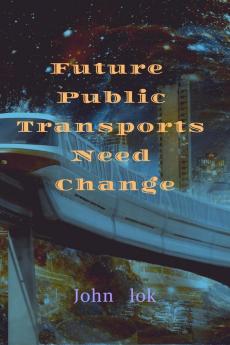
by
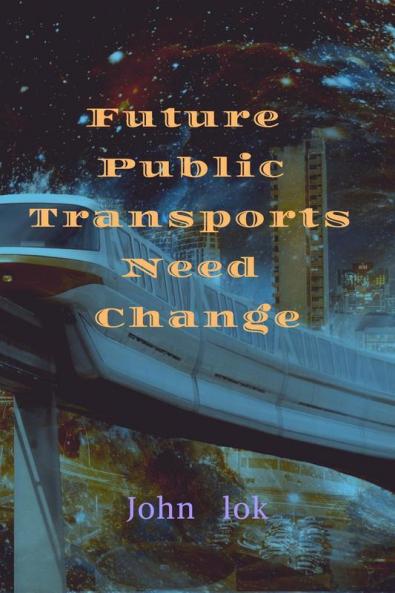
John Lok
English






Paperback
₹612
₹690
11.3% OFF
(All inclusive*)
Delivery Options
Please enter pincode to check delivery time.
*COD & Shipping Charges may apply on certain items.
Review final details at checkout.
Looking to place a bulk order? SUBMIT DETAILS
Delivery Options
Please enter pincode to check delivery time.
*COD & Shipping Charges may apply on certain items.
Review final details at checkout.
About The Book
Description
Author
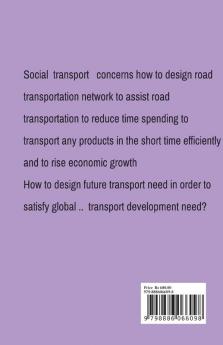
<p>The concept of future transportation is undergoing a profound transformation driven by the intersection of behavioral economics technological innovation and shifting societal values.</p><p>As explored in the works of scholars like my view the transition toward autonomous shared and electrified transport is not merely a technical challenge but a psychological and behavioral one.[</p><p>To understand how we feel about future transport we must recognize that human decision-making is rarely governed by pure rational utility maximization. </p><p>My view argues that future transport tools must move beyond efficiency metrics to address the emotional and experiential needs of the user</p><p>] In traditional economic models the cost of transport is often calculated as C=P+T where C is total cost P is price and T is time.[3] However behavioral models incorporate a psychological cost factor S representing stress comfort and social status leading to a more nuanced equation: C=P+T+S.</p><p>To incentivize the adoption of sustainable transport policymakers and manufacturers must reduce S through seamless integration gamification and the creation of third spaces within transit vehicles that allow for productivity or relaxation.</p>

Piracy-free

Assured Quality

Secure Transactions

Fast Delivery

Sustainably Printed
Details
ISBN 13
9798886066098
Publication Date
-22-02-2022
Pages
-212
Weight
-294 grams
Dimensions
-152.4x228.6x11.97 mm
