

by
John Lok
English



Paperback
₹296
₹600
50.67% OFF
(All inclusive*)
Delivery Options
Please enter pincode to check delivery time.
*COD & Shipping Charges may apply on certain items.
Review final details at checkout.
Looking to place a bulk order? SUBMIT DETAILS
Delivery Options
Please enter pincode to check delivery time.
*COD & Shipping Charges may apply on certain items.
Review final details at checkout.
About The Book
Description
Author
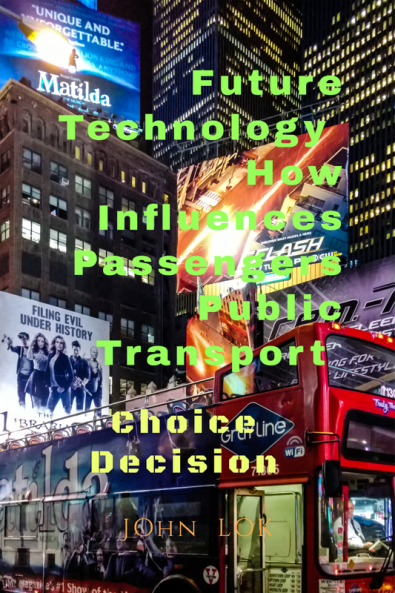
<p>Tecnological innovations like electric vehicles (EVs) and non-manual driving cars (autonomous vehicles) . My view acknowledges the environmental benefits of EVs but points out that consumer acceptance can be hindered by factors such as range anxiety and higher initial purchase costs even if long-term savings are substantial .</p><p>Similarly the adoption of autonomous vehicles faces challenges related to trust safety concerns and the psychological discomfort of relinquishing control to a machine . These insights are rooted in behavioral economic theories such as prospect theory which explain how individuals make decisions under risk and uncertainty often deviating from purely rational choices .</p><p>My view also stresses the importance of improving public transport service quality to attract more users and reduce reliance on personal vehicles . My view speculates on future developments including the integration of artificial intelligence (AI) into various transport forms like trains trams and ferries and questions public acceptance of such AI-driven systems . My work consistently integrates insights from psychology with traditional economic theories to provide a comprehensive understanding of human behavior in economic contexts including consumer behavior market dynamics and policy implications related to transportation .</p>

Piracy-free

Assured Quality

Secure Transactions

Fast Delivery

Sustainably Printed
Details
ISBN 13
9798888495902
Publication Date
-31-10-2022
Pages
-130
Weight
-162 grams
Dimensions
-139.7x215.9x7.57 mm
