

English


Paperback
₹2000
(All inclusive*)
Delivery Options
Please enter pincode to check delivery time.
*COD & Shipping Charges may apply on certain items.
Review final details at checkout.
Looking to place a bulk order? SUBMIT DETAILS

Piracy-free

Assured Quality

Secure Transactions
About The Book
Description
Author
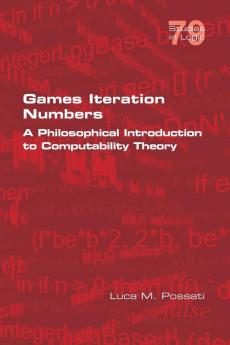
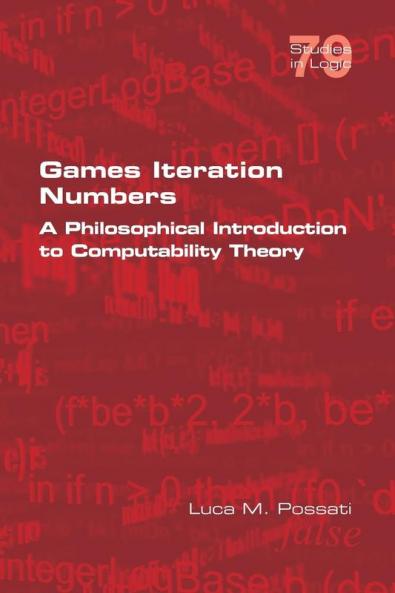
<p>Is it possible to conceive two perfectly identical objects? Is identity even possible without</p><p>individuality? How would a perfectly symmetrical universe be? The current philosophical debate on identity and in particular on the necessity of the Leibniz&#39;s principle of the identity of indiscernibles is complex and multi-faceted. Recent works have indicated that the problem becomes increasingly complex if we apply it to mathematical objects. Is it possible to speak of &lsquo;identity&rsquo; for numbers? How can we identify numbers?</p><p>Drawing on philosophical accounts on identity and individuality in contemporary metaphysics (analytic and continental) this book explores a new path. The author argues that an identity without individuality is possible. By means of a critique of the idea of the identity of indiscernibles the book formulates the concept of &#39;manifold identity&#39; through the concept of &#39;iteration&#39;. Iteration is a specific transgression of the identity of indiscernibles arising from the collision of two forms of identity: qualitative identity and numerical identity. Nonetheless a pair of perfectly identical objects is still a paradox a contradiction.</p><p>The first thesis of the book is that iteration is a paraconsistent and dialethetical logical structure which allows for true contradiction. The author applies recent works in non-standard logic and dialetheism (Priest Routley Berto) to illustrate how we can make sense of the idea that objects can be perfectly identical but discernible.</p><p>The second thesis of the book is that iteration is the basis of enumerability and computability. A &#39;computable object&#39; is an object constructed on the basis of an iterative logic. It is possible to re-</p><p>interpret all the primary concepts of computability theory through the logic of iteration.</p><p>&nbsp;</p>
Piracy-free
Assured Quality
Secure Transactions
Delivery Options
Please enter pincode to check delivery time.
*COD & Shipping Charges may apply on certain items.
Review final details at checkout.
Details
ISBN 13
9781848902985
Publication Date
-22-01-2019
Pages
-198
Weight
-289 grams
Dimensions
-156x234x10.66 mm
