

English


₹3051
₹3140
2.83% OFF
(All inclusive*)
Paperback
Delivery Options
Please enter pincode to check delivery time.
*COD & Shipping Charges may apply on certain items.
Review final details at checkout.
Looking to place a bulk order? SUBMIT DETAILS
Delivery Options
Please enter pincode to check delivery time.
*COD & Shipping Charges may apply on certain items.
Review final details at checkout.
About The Book
Description
Author
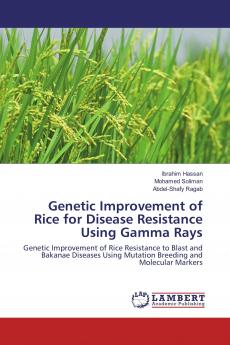
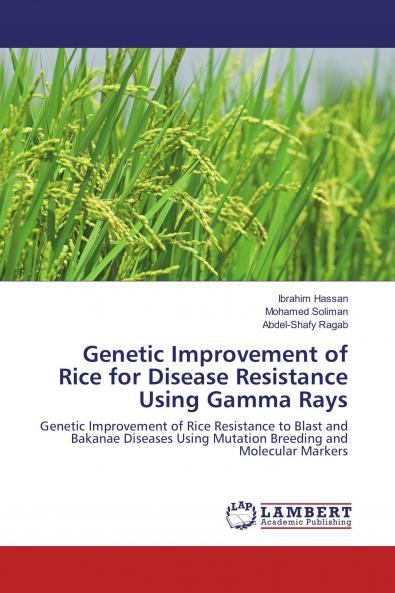
Rice diseases are one of the major limiting factors of rice production worldwide specially blast (Magnaporthae grisea) and bakanae (Fusarium moniliforme) diseases. Therefore this study was conducted to improve rice for resistance to blast and bakanae diseases as well as yield and yield related traits using gamma rays and molecular markers. Rice grains were irradiated with different doses of gamma rays (150 200 250 300 Gy). Eleven rice mutants were selected and evaluated for resistance to blast and bakanae diseases under natural and artificial infection conditions. Only nine mutants were resistance to either diseases or one of them. Molecular screening of resistance (R) genes to blast and bakanae diseases were performed for the selected mutants and its parents using molecular markers. The results showed that blast resistant mutants have a combination of partial and complete resistance genes that confer durable resistance to all blast races. Therefore molecular markers are powerful tools in increasing the effectiveness of selection in breeding programs. Also mutation breeding is very effective approach to develop new resistant genotypes to blast and bakanae disease in rice.

Piracy-free

Assured Quality

Secure Transactions

Fast Delivery

Sustainably Printed
Details
ISBN 13
9786133995741
Publication Date
-27-12-2017
Pages
-76
Weight
-111 grams
Dimensions
-150x220x4.5 mm
