



English





Hardback
₹14609
₹18368
20.46% OFF
(All inclusive*)
Delivery Options
Please enter pincode to check delivery time.
*COD & Shipping Charges may apply on certain items.
Review final details at checkout.
Looking to place a bulk order? SUBMIT DETAILS
Delivery Options
Please enter pincode to check delivery time.
*COD & Shipping Charges may apply on certain items.
Review final details at checkout.
About The Book
Description
Author
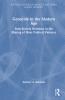
<p>This book explores why some episodes of mass political violence and genocide are so much deadlier than others and under what conditions perpetrators in government and society opt for brutality as a means of accomplishing their goals. Introducing the new concept of mass political violence to explain genocide and other mass killings in the modern world the author investigates how perpetrators sustain the capacity to enact violence on a large-scale irrespective of motives. Cases including the Holocaust Soviet Union Rwanda Cambodia the Lord’s Resistance Army the Islamic State the Ottoman Empire of the 1890s Mao Zedong’s revolutionary violence the Congo Crisis and Darfur are used by the author to identify four types of mass political violence perpetrators – state actors state-society coalitions state-sponsored groups and non-state actors to explain historical trends and identify which perpetrators are most likely to emerge in a given socio-political context and sustain violence over time. Comparative and grounded in case studies this book will interest policymakers diplomats governmental advisers practitioners and industry researchers. It will also be invaluable to students and scholars of Political Science International Affairs Holocaust and Genocide Studies Human Rights Sociology Anthropology Geography Political Psychology Religious Studies Gender Studies Public Policy Media Studies and Criminology.</p>

Piracy-free

Assured Quality

Secure Transactions

Fast Delivery

Sustainably Printed
Details
ISBN 13
9781032634944
Publication Date
-30-01-2025
Pages
-350
Weight
-590 grams
Dimensions
-155.96x233.93x19.98 mm
