


German


Paperback
₹2894
(All inclusive*)
Delivery Options
Please enter pincode to check delivery time.
*COD & Shipping Charges may apply on certain items.
Review final details at checkout.
Looking to place a bulk order? SUBMIT DETAILS
Delivery Options
Please enter pincode to check delivery time.
*COD & Shipping Charges may apply on certain items.
Review final details at checkout.
About The Book
Description
Author
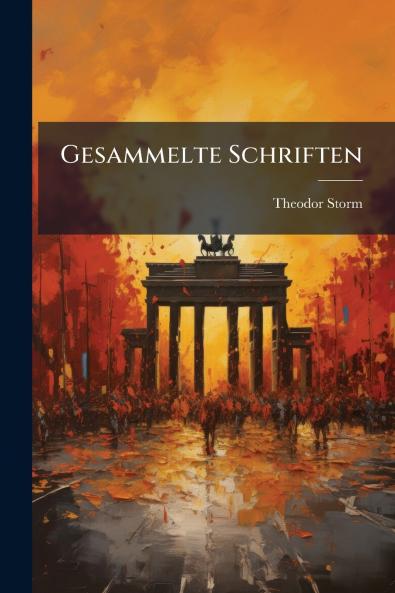
<p><i>Gesammelte Schriften</i> presents a comprehensive collection of the literary works of Theodor Storm one of Germany's most esteemed regionalist writers of the 19th century. This edition reflecting the literary landscape of 1891 offers readers a deep dive into Storm's prose and poetry showcasing his evocative style and profound insights into the human condition. From his poignant short stories depicting the landscapes and people of Schleswig-Holstein to his lyrical poems resonating with themes of nature and longing this collection encapsulates the breadth and depth of Storm's literary genius.</p> <p>Readers will discover classic works such as Immensee and other narratives that cemented Storm's reputation as a master of the Novelle. The collection also includes a selection of his poems revealing his skill as a lyricist. <i>Gesammelte Schriften</i> is invaluable for scholars students and enthusiasts of German literature offering a window into the cultural and intellectual life of 19th-century Germany and solidifying Theodor Storm's legacy as a key figure in literary history.</p><p>This work has been selected by scholars as being culturally important and is part of the knowledge base of civilization as we know it. This work was reproduced from the original artifact and remains as true to the original work as possible. Therefore you will see the original copyright references library stamps (as most of these works have been housed in our most important libraries around the world) and other notations in the work.</p><p>This work is in the public domain in the United States of America and possibly other nations. Within the United States you may freely copy and distribute this work as no entity (individual or corporate) has a copyright on the body of the work.</p><p>As a reproduction of a historical artifact this work may contain missing or blurred pages poor pictures errant marks etc. Scholars believe and we concur that this work is important enough to be preserved reproduced and made generally available to the public. We appreciate your support of the preservation process and thank you for being an important part of keeping this knowledge alive and relevant.</p>

Piracy-free

Assured Quality

Secure Transactions

Fast Delivery

Sustainably Printed
Details
ISBN 13
9781144292186
Publication Date
-12-02-2010
Pages
-494
Weight
-695 grams
Dimensions
-156x234x26.08 mm
