


English



Paperback
₹1739
(All inclusive*)
Delivery Options
Please enter pincode to check delivery time.
*COD & Shipping Charges may apply on certain items.
Review final details at checkout.
Looking to place a bulk order? SUBMIT DETAILS
Delivery Options
Please enter pincode to check delivery time.
*COD & Shipping Charges may apply on certain items.
Review final details at checkout.
About The Book
Description
Author
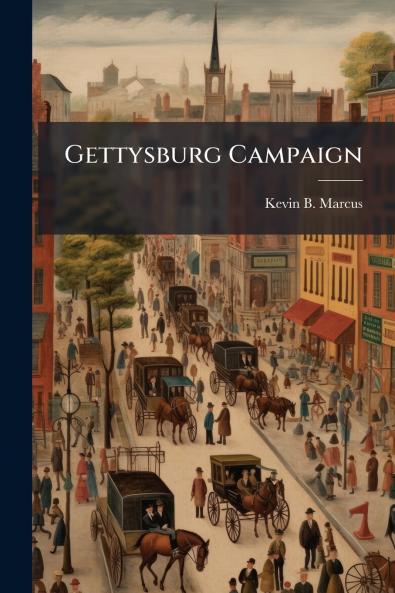
<p>While hundreds of volumes exist on the Gettysburg Campaign most examine the battle's tactical framework and focus on the activities of brigades and regiments. However of more interest to the serving military professional may be an analysis of the degree to which the Confederacy's design and execution exemplify attributes of what is now known as the operational art. This monograph provides just such a study. The importance of the operational level of war and its supporting art cannot be overstated. Only with a recognition of this level between those of strategy and tactics and a mastery of its art can commanders have the appropriate frame of reference to link strategic goals assigned by national authorities with the tactical activities of their subordinate commanders. Although U.S. Army doctrine may have been late in formally recognizing the existence and significance of the operational level of war and its supporting art it may have appeared very early in our military history. Indeed without being named as such the concept may have been placed into effect as early as the American Civil War. Providing a brief background of the Campaign's plan and events these same are then analyzed against seven characteristics of the operational level of war. Among these characteristics are the degree to which the Confederacy's plan for the campaign (and its subsequent execution) evidenced operational vision planned and executed distributed operations in the framework of a distributed campaign and was supported and enabled by continuous logistics and instantaneous command and control. Application of the criteria to the planning and execution of the Gettysburg Campaign reveals that the Gettysburg Campaign does not provide an earlier birth date of the operational art. The following issues prove most significant. First while Lee's operational vision resulted in a distributed operation it was not part of a distributed campaign. While Lee could (and did) plan truly distributed</p><p>This work has been selected by scholars as being culturally important and is part of the knowledge base of civilization as we know it. This work was reproduced from the original artifact and remains as true to the original work as possible. Therefore you will see the original copyright references library stamps (as most of these works have been housed in our most important libraries around the world) and other notations in the work.</p><p>This work is in the public domain in the United States of America and possibly other nations. Within the United States you may freely copy and distribute this work as no entity (individual or corporate) has a copyright on the body of the work.</p><p>As a reproduction of a historical artifact this work may contain missing or blurred pages poor pictures errant marks etc. Scholars believe and we concur that this work is important enough to be preserved reproduced and made generally available to the public. We appreciate your support of the preservation process and thank you for being an important part of keeping this knowledge alive and relevant.</p>

Piracy-free

Assured Quality

Secure Transactions

Fast Delivery

Sustainably Printed
Details
ISBN 13
9781288251742
Publication Date
-09-11-2012
Pages
-68
Weight
-111 grams
Dimensions
-156x234x3.58 mm
