



English




Paperback
₹4443
(All inclusive*)
Delivery Options
Please enter pincode to check delivery time.
*COD & Shipping Charges may apply on certain items.
Review final details at checkout.
Looking to place a bulk order? SUBMIT DETAILS

Piracy-free

Assured Quality

Secure Transactions
About The Book
Description
Author
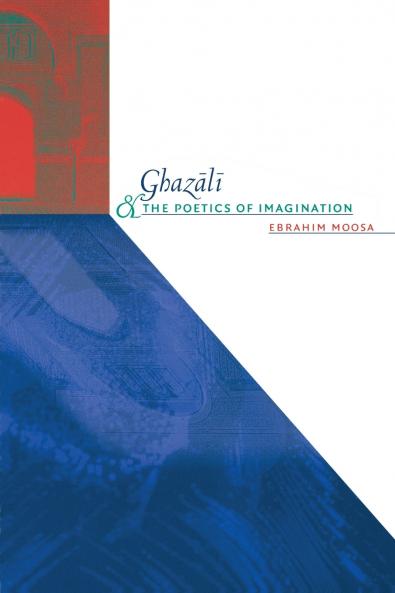
Abu Hamid al-Ghaz&#x101;l&#x12B; a Muslim jurist-theologian and polymath who lived from the mid-eleventh to the early twelfth century in present-day Iran is a figure equivalent in stature to Maimonides in Judaism and Thomas Aquinas in Christianity. He is best known for his work in philosophy ethics law and mysticism. In an engaged re-reading of the ideas of this preeminent Muslim thinker Ebrahim Moosa argues that Ghaz&#x101;l&#x12B;&#x2019;s work has lasting relevance today as a model for a critical encounter with the Muslim intellectual tradition in a modern and postmodern context.<br/><br/>Moosa employs the theme of the threshold or <i>dihliz</i> the space from which Ghaz&#x101;l&#x12B; himself engaged the different currents of thought in his day and proposes that contemporary Muslims who wish to place their own traditions in conversation with modern traditions consider the same vantage point. Moosa argues that by incorporating elements of Islamic theology neoplatonic mysticism and Aristotelian philosophy Ghaz&#x101;l&#x12B;&#x2019;s work epitomizes the idea that the answers to life&#x2019;s complex realities do not reside in a single culture or intellectual tradition. Ghaz&#x101;l&#x12B;&#x2019;s emphasis on poiesis &#x2014; creativity imagination and freedom of thought &#x2014; provides a sorely needed model for a cosmopolitan intellectual renewal among Muslims Moosa argues. Such a creative and critical inheritance he concludes ought to be heeded by those who seek to cultivate Muslim intellectual traditions in today&#x2019;s tumultuous world.
Piracy-free
Assured Quality
Secure Transactions
Delivery Options
Please enter pincode to check delivery time.
*COD & Shipping Charges may apply on certain items.
Review final details at checkout.
Details
ISBN 13
9780807856123
Publication Date
-30-06-2005
Pages
-368
Weight
-498 grams
Dimensions
-152x229x20.83 mm
