

English


Paperback
₹4195
(All inclusive*)
Delivery Options
Please enter pincode to check delivery time.
*COD & Shipping Charges may apply on certain items.
Review final details at checkout.
Looking to place a bulk order? SUBMIT DETAILS
Delivery Options
Please enter pincode to check delivery time.
*COD & Shipping Charges may apply on certain items.
Review final details at checkout.
About The Book
Description
Author
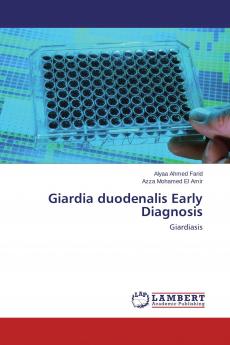
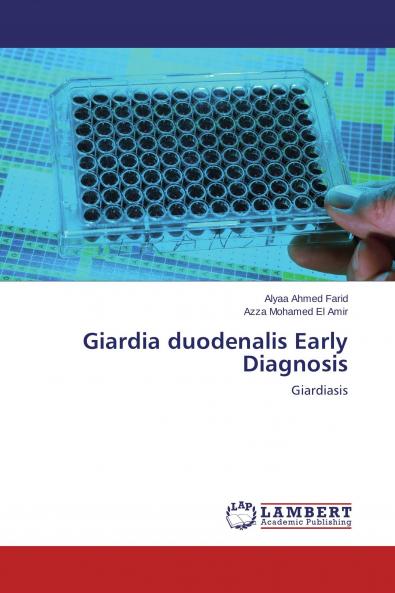
Giardia duodenalis (synonyms G. lamblia or G. intestinalis) the only species belonging to the genus Giardia found in humans is a pathogenic protozoan with a worldwide distribution having a more relevant prevalence in warm climate and in children. G. duodinalis is a water-borne flagellated parasite that causes giardiasis in humans. In addition giardiasis affects domestic and wild mammals “e.g. cats dogs cattle deer and beavers”).In the diagnosis of Giardia stool examination is the traditional safest and easiest method. Microscopy of Giardia cysts and trophozoites is more straightforward and there is little risk of confusion with other parasites. Moreover only “ghost” cysts with an empty appearance are sometimes not recognized as Giardia parasites. And thus it is recommended that at least three samples be examined in order to rule out giardiasis which is time consuming and delay the diagnosis. Also its sensitivity depends on the burden of infection the freshness of the specimen and the experience level of the microscopist. Stains are used to improve detection of specific organisms.

Piracy-free

Assured Quality

Secure Transactions

Fast Delivery

Sustainably Printed
Details
ISBN 13
9783659801006
Publication Date
-02-11-2015
Pages
-76
Weight
-116 grams
Dimensions
-150x220x4.5 mm
