

English


Paperback
₹5634
₹7427
24.14% OFF
(All inclusive*)
Delivery Options
Please enter pincode to check delivery time.
*COD & Shipping Charges may apply on certain items.
Review final details at checkout.
Looking to place a bulk order? SUBMIT DETAILS
Delivery Options
Please enter pincode to check delivery time.
*COD & Shipping Charges may apply on certain items.
Review final details at checkout.
About The Book
Description
Author(s)
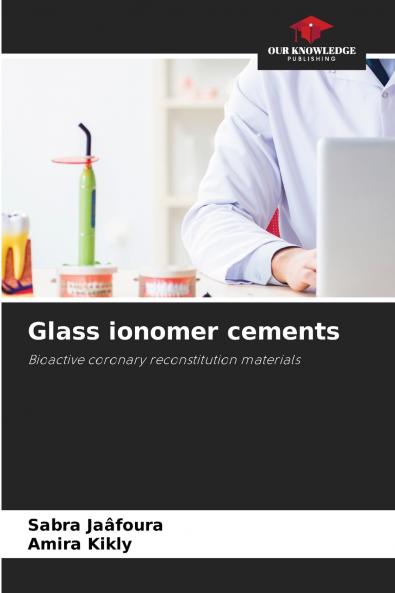
Glass ionomer cements have interesting properties due to the release of fluoride that they allow their chemical adhesion to dental tissues their good sealing and the good pulpal tolerance with regard to them. Their major disadvantage is that they cannot withstand excessively high occlusal loads their mechanical properties being much lower than those of composite resins which makes them contraindicated in posterior areas. Additionally although there have been many improvements made over the years they remain relatively opaque and unaesthetic. In this work we propose a synthesis of the different glass ionomer cements analyzed with regard to their compositions and properties. Secondly new bioactive materials recently introduced to the dental market are presented.

Piracy-free

Assured Quality

Secure Transactions

Fast Delivery

Sustainably Printed
Details
ISBN 13
9786207833702
Publication Date
-27-05-2025
Pages
-56
Weight
-90 grams
Dimensions
-152x229x3.41 mm
