


English



Hardback
₹16584
₹21265
22.01% OFF
(All inclusive*)
Delivery Options
Please enter pincode to check delivery time.
*COD & Shipping Charges may apply on certain items.
Review final details at checkout.
Looking to place a bulk order? SUBMIT DETAILS
Delivery Options
Please enter pincode to check delivery time.
*COD & Shipping Charges may apply on certain items.
Review final details at checkout.
About The Book
Description
Author
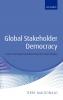
A pressing question at the forefront of current global political debates is: how can we salvage the democratic project in the context of ''globalization''? In recent years political activists have mounted high-profile campaigns for the democratization of powerful international institutions such as the World Bank and IMF and for greater ''corporate accountability''. In turn many of the NGOs linked to these campaigns have themselves faced demands for greater democratic legitimacy. Global Stakeholder Democracy responds to these challenges by outlining an innovative theoretical and institutional framework for democratizing the many state and non-state actors wielding public power in contemporary global politics. In doing so the book lays out a promising new agenda for global democratic reform. Its analysis begins with the recognition that we cannot simply recreate traditional constitutional and electoral institutions of democratic states on a global scale through the construction of a democratic ''super-state''. Rather we must develop new kinds of democratic institutions capable of dealing with the realities of global pluralism and democratizing powerful non-state actors as well as states.Through reflecting on the democratic dilemmas surrounding the political power of global NGOs the book mounts a powerful challenge to the state-centric theoretical assumptions that have underpinned the established democratic theories of both ''cosmopolitan'' and ''communitarian'' liberals. In particular it challenges the widespread assumption that ''sovereign'' power ''bounded'' (national or global) societies and ''electoral'' processes are essential institutional foundations of a democratic system. The book then re-thinks the democratic project from its conceptual foundations posing the questions: What needs to be controlled? Who ought to control it? How could they do so? In answering these questions the book develops a novel theoretical model of representative democracy that is focused on plural (state and non-state) actors rather than on unitary state structures. It elaborates a democratic framework based on the new theoretical concepts of ''public power'' ''stakeholder communities'' and ''non-electoral representation'' and illustrates the practical implications of these proposals for projects of global institutional reform.

Piracy-free

Assured Quality

Secure Transactions
Details
ISBN 13
9780199235001
Publication Date
-07-08-2008
Pages
-248
Weight
-450 grams
Dimensions
-156x234x15.88 mm
