


English


Hardback
₹19858
(All inclusive*)
Delivery Options
Please enter pincode to check delivery time.
*COD & Shipping Charges may apply on certain items.
Review final details at checkout.
Looking to place a bulk order? SUBMIT DETAILS
Delivery Options
Please enter pincode to check delivery time.
*COD & Shipping Charges may apply on certain items.
Review final details at checkout.
About The Book
Description
Author
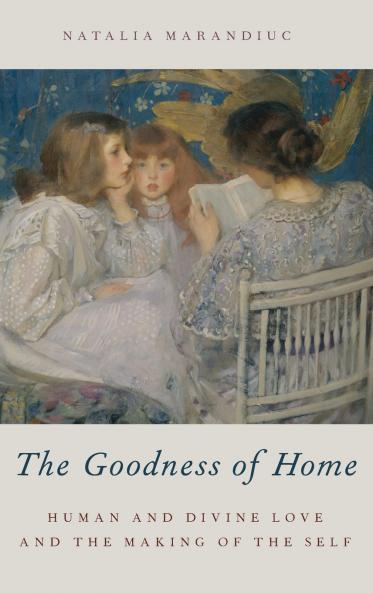
In a modern world characterized by a precarious job market class inequality and a global migrant crisis Natalia Marandiuc asks the question: How does home affect one's identity? In this wide-ranging contribution to Christian theological anthropology Marandiuc argues that love attachments function as sources of subjectivity and enablers of human freedom. Human loves and the love of God are co-creators of the self and they situate human subjectivity in a relational home. Paradoxically the depth of human belonging dependence is thus directly proportional to the strength of human agency independence. <p/>Building upon S&#65533;ren Kierkegaard research in the neuroscience of attachment theory and contemporary constructions of the self <em>The Goodness of Home</em> makes original contributions to several central issues in contemporary Christian theological anthropology. Love is understood as central to the building of subjectivity which is seen as an intersection of desire and need. For Marandiuc the self is a complex process of becoming rather than a static entity with essentialist features. She looks at human difference in terms of the formation of particular subjectivities through particular loves. Ultimately she depicts human love as interwoven with the infinite streams of divine love forming a sacramental site for God's presence and playing a constitutive role in the making of the self.<br>

Piracy-free

Assured Quality

Secure Transactions

Fast Delivery

Sustainably Printed
Details
ISBN 13
9780190674502
Publication Date
-01-02-2018
Pages
-226
Weight
-420 grams
Dimensions
-156x234x14.29 mm
