

English


Paperback
₹1565
₹1790
12.59% OFF
(All inclusive*)
Delivery Options
Please enter pincode to check delivery time.
*COD & Shipping Charges may apply on certain items.
Review final details at checkout.
Looking to place a bulk order? SUBMIT DETAILS
Delivery Options
Please enter pincode to check delivery time.
*COD & Shipping Charges may apply on certain items.
Review final details at checkout.
About The Book
Description
Author
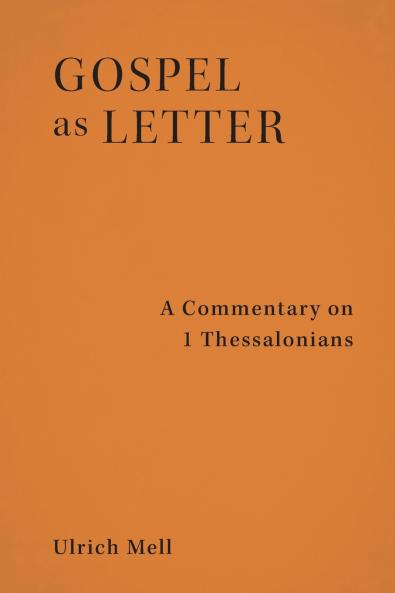
<p>Paul's first letter to the Thessalonians enacts a historical paradigm shift by unfolding in written form which was previously only performed orally in early Christianity. This media revolution in Christianity begins about 50 CE and will successively lead to the collection of 27 writings in the New Testament. Characteristics of the letter at the beginning and end show that it is a semi-official letter from the church founders to the Christian confessional church in Thessalonica. Since Paul stipulates that his letter should be read out in a general assembly of the congregation there is a mixture of artificial speech with a calculated rhetorical form--i.e. narratio propositio argumentatio and peroratio. The rhetorical genre of 1 Thessalonians is that of deliberative eulogy which seeks to encourage the community eagerly awaiting the return of Christ in the virtues of faith love and hope they practice. The goal is complete holiness in order to prepare a befitting reception for the Parousia Christ descending from heaven. Mell pays special attention to the ethical instructions on marriage business relationships sibling love and household management made in the letter's argumentatio. Paul resolves the difficult question of how deceased church members can participate in the future earthly salvation by inferring from the Gospel itself that the resurrection of Christ ensures the resurrection of all. In this way for the first time in early Christianity the meaning of Christ as a mediator of salvation is unfolded so that the congregation consisting of those who are alive and those who will become alive again participates in the future victory of God's rule over the end-time power.</p>

Piracy-free

Assured Quality

Secure Transactions

Fast Delivery

Sustainably Printed
Details
ISBN 13
9798889835653
Publication Date
-07-01-2025
Pages
-424
Weight
-571 grams
Dimensions
-152x229x23.96 mm
