


French


₹2539
₹2697
5.86% OFF
(All inclusive*)
Paperback
Delivery Options
Please enter pincode to check delivery time.
*COD & Shipping Charges may apply on certain items.
Review final details at checkout.
Looking to place a bulk order? SUBMIT DETAILS
Delivery Options
Please enter pincode to check delivery time.
*COD & Shipping Charges may apply on certain items.
Review final details at checkout.
About The Book
Description
Author(s)
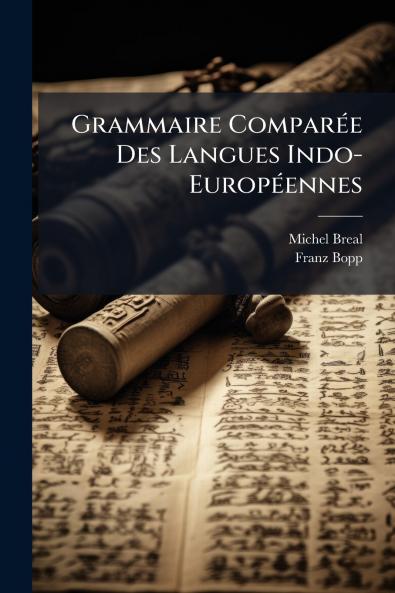
<p><i>Grammaire Compar&eacute;e des Langues Indo-Europ&eacute;ennes</i> r&eacute;dig&eacute;e par Francis Meunier et bas&eacute;e sur les travaux de Michel Br&eacute;al et Franz Bopp est une &eacute;tude approfondie de la linguistique compar&eacute;e. Publi&eacute;e initialement en 1884 cette grammaire explore les relations entre les langues indo-europ&eacute;ennes offrant un registre d&eacute;taill&eacute; des structures grammaticales et des &eacute;volutions linguistiques. </p><p>Ce livre est une ressource pr&eacute;cieuse pour les linguistes les &eacute;tudiants et toute personne int&eacute;ress&eacute;e par l'histoire et l'&eacute;volution des langues. Il pr&eacute;sente une analyse rigoureuse et m&eacute;thodique mettant en lumi&egrave;re les similitudes et les diff&eacute;rences entre les langues indo-europ&eacute;ennes. La clart&eacute; de la pr&eacute;sentation et la richesse des exemples font de cette grammaire un ouvrage de r&eacute;f&eacute;rence durable dans le domaine de la linguistique.</p><p>This work has been selected by scholars as being culturally important and is part of the knowledge base of civilization as we know it. This work was reproduced from the original artifact and remains as true to the original work as possible. Therefore you will see the original copyright references library stamps (as most of these works have been housed in our most important libraries around the world) and other notations in the work.</p><p>This work is in the public domain in the United States of America and possibly other nations. Within the United States you may freely copy and distribute this work as no entity (individual or corporate) has a copyright on the body of the work.</p><p>As a reproduction of a historical artifact this work may contain missing or blurred pages poor pictures errant marks etc. Scholars believe and we concur that this work is important enough to be preserved reproduced and made generally available to the public. We appreciate your support of the preservation process and thank you for being an important part of keeping this knowledge alive and relevant.</p>

Piracy-free

Assured Quality

Secure Transactions

Fast Delivery

Sustainably Printed
Details
ISBN 13
9781141368549
Publication Date
-01-01-2010
Pages
-258
Weight
-372 grams
Dimensions
-156x234x13.96 mm
