


English


Hardback
₹3080
₹3084
0.13% OFF
(All inclusive*)
Delivery Options
Please enter pincode to check delivery time.
*COD & Shipping Charges may apply on certain items.
Review final details at checkout.
Looking to place a bulk order? SUBMIT DETAILS

Piracy-free

Assured Quality

Secure Transactions
About The Book
Description
Author
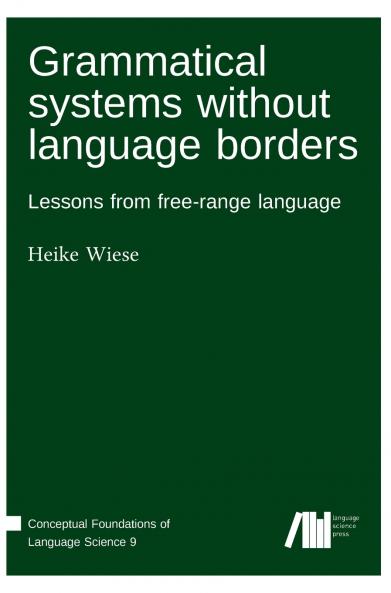
Current research in grammatical analysis and sociolinguistics points to two core characteristics of language that seem incommensurable at first sight: (1) research on linguistic structure indicates internal organisation and coherence and the workings and interactions of distinct grammatical systems but (2) sociolinguistic research suggests that language borders and bound languages are counterfactual social constructs that cannot capture the diversity and fluidity of actual language use. This seems to constitute something like a quantum-linguistic paradox: language systems aren't real (they are just ideological constructions) but at the same time they are a reflection of actual structure. This book shows how this paradox can be resolved through an architecture that allows for grammatical systems without presupposing language borders: this architecture puts communicative situations rather than languages at the core of linguistic systematicity while named languages are captured as optional sociolinguistic indices. The approach builds on insights from free-range language a metaphor for language in settings that are less confined by monoglossic ideologies. The author looks at four different kinds of settings: urban markets heritage language settings multiethnic adolescent peer-groups and digital social media. Central lessons to be learned from such free-range language settings are: (1) communicative situations support linguistic differentiation and can thus be the basis for fluid registers; (2) grammatical systematicity is grounded in communicative situations and does not require bound languages and linguistic borders; (3) named languages can emerge as social indices signalling belonging but this is an optional not a necessary development.
Piracy-free
Assured Quality
Secure Transactions
Delivery Options
Please enter pincode to check delivery time.
*COD & Shipping Charges may apply on certain items.
Review final details at checkout.
Details
ISBN 13
9783985540877
Publication Date
-11-12-2023
Pages
-108
Weight
-293 grams
Dimensions
-170x244x7.94 mm
