

English


₹2602
₹2880
9.65% OFF
(All inclusive*)
Paperback
Delivery Options
Please enter pincode to check delivery time.
*COD & Shipping Charges may apply on certain items.
Review final details at checkout.
Looking to place a bulk order? SUBMIT DETAILS
Delivery Options
Please enter pincode to check delivery time.
*COD & Shipping Charges may apply on certain items.
Review final details at checkout.
About The Book
Description
Author(s)
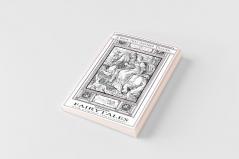
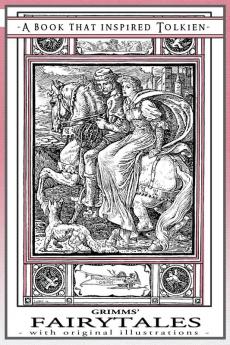
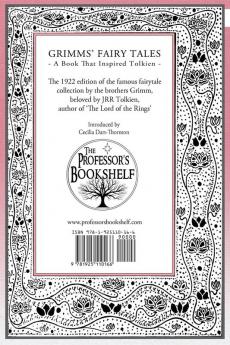
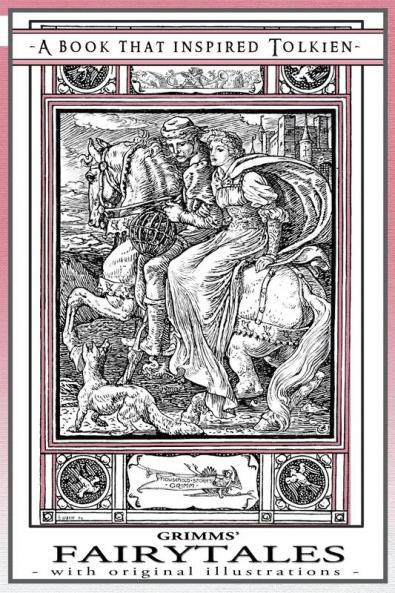
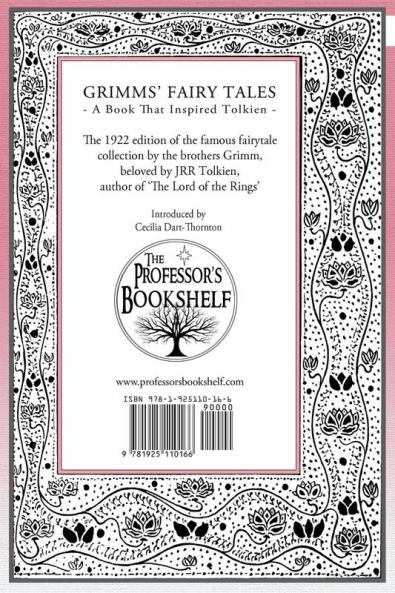
<p>GRIMMS&rsquo; FAIRY TALES &ndash; A BOOK THAT INSPIRED TOLKIEN. With original illustrations. THE PROFESSOR&rsquo;S BOOKSHELF #10</p><p>Professor J.R.R. Tolkien author of The Lord of the Rings and The Hobbit made specific mention of the brothers Grimm In his essay &lsquo;On Fairy Stories&rsquo;. In his essay he mentioned his love of a tale by the name of &lsquo;The Juniper Tree&rsquo; in the Red Fairy Book renamed &lsquo;The Almond Tree&rsquo; for British audiences.</p><p>Tolkien mined the folklore of the Grimm brothers for literary gems. Cecilia Dart-Thornton&rsquo;s new introduction quotes Tolkien&rsquo;s own words on the effect of fairy stories on the human mind. &nbsp;</p><p>In &ldquo;J.R.R. Tolkien Encyclopedia: Scholarship and Critical Assessment&rdquo; by Michael D. C. Drout Maria Raffaella&nbsp; Benvenuto writes &ldquo;A number of motifs from the Grimms&#39; fairy tales can be recognized in Tolkien&#39;s work especially in &lsquo;The Hobbit&rsquo;. As both Shippey and Anderson (&lsquo;The Annotated Hobbit&rsquo;) point out part of the episode of the three trolls in chapter 2 was inspired by &lsquo;Der tapfere Schneiderlein&rsquo; [&lsquo;The Brave Little Tailor&rsquo;] which appeared in the 1812 edition of &lsquo;Kinder- und Hausmarchen&rsquo;. Besides Tolkien probably derived some elements of the Dwarves&#39;s character and behavior from the tales of &lsquo;Schneewittchen&rsquo;&nbsp; [&lsquo;Snow-white&rsquo; also from 1812] and &lsquo;Schneeweisscheo und Rosenrot&rsquo; [&lsquo;Snow-white and Rose-red&rsquo; from the 1837 edition]. The influence of the Grimms&#39; tales can even be seen in The Silmarillion with the episode of Luthien growing her hair in order to effect her escape echoing the well known tale of &lsquo;Rapunzel&rsquo;.&rdquo;</p><p>The 1882 English translation of Grimms&rsquo; Fairy Tales was beautifully illustrated by Walter Crane. Like William Morris another of Tolkien&rsquo;s favourite fantasy authors&nbsp; Crane was an influential member of the Arts and Crafts movement. This new edition by The Professor&rsquo;s Bpokshelf a close replica of the original contains more than 180 of Crane&rsquo;s pictures embellishments and ornate initials. &lsquo;Certain artists did provide visual sources for Tolkien&rsquo;s writing particularly in their illustrations for the fairy tales that so appealed to him.&rsquo; So writes Mary Podles in her article &lsquo;Tolkien and the New Art: Visual Sources for &ldquo;The Lord of the Rings&rdquo;&rsquo;. &lsquo;Crane illustrated a version of &ldquo;Grimm&rsquo;s Fairy Tales&rdquo; that may in several instances have inspired specific scenes and incidents in &ldquo;The Lord of the Rings&rdquo;. Often Crane added details to his black-and-white illustrations that were not in Grimm but proved to be the very ones that stuck in Tolkien&rsquo;s memory and resurfaced in his novel.&#39; Crane&rsquo;s illustrations for the fairy tales that Tolkien read as a boy do justice to the richness strangeness and beauty of the folklore which fired the imagination of the author of &lsquo;The Lord of the Rings&rsquo;.</p>

Piracy-free

Assured Quality

Secure Transactions

Fast Delivery

Sustainably Printed
Details
ISBN 13
9781925110166
Publication Date
-01-07-2018
Pages
-332
Weight
-451 grams
Dimensions
-152x229x17.6 mm
