

English


Hardback
₹5768
(All inclusive*)
Delivery Options
Please enter pincode to check delivery time.
*COD & Shipping Charges may apply on certain items.
Review final details at checkout.
Looking to place a bulk order? SUBMIT DETAILS

Piracy-free

Assured Quality

Secure Transactions
About The Book
Description
Author
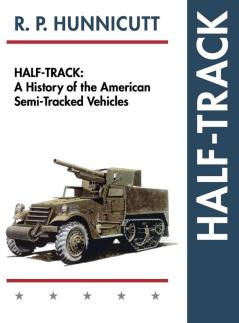
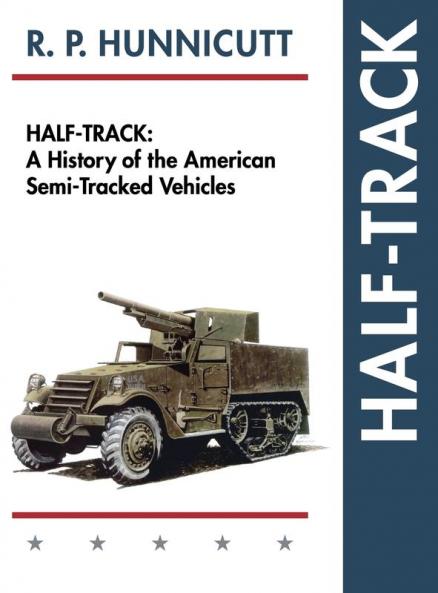
<p>Featuring over a thousand photos from the National Archives diagrams and detailed specifications Hunnicutt's <i>Half-Track</i> remains the definitive development history of half-track vehicles for the military historian professional soldier and tank restorer.</p> <p>In this ambitious work Hunnicutt details the developmental history of half-tracks examining its modifications and effectiveness. Products of a pre-war development program half-track vehicles served in all theaters of operation from the first to the final days of WWII and many models remained active long after the Korean War. The armored half-track was one of few vehicles available to equip the new divisions being formed just prior to WWII.</p><p>Part I traces the early development beginning with the slow half-track of WWI to the faster vehicles developed after the evaluation of the French Citroen-Kegresse P17 in 1931. These vehicles were unarmored half-track cars and trucks intended for use as prime movers and reconnaissance vehicles.</p><p>In 1938 the half-track suspension was installed on the M2A1 scout car and the converted vehicle became the half-track personnel carrier T7. This was the first armored half-track but tests showed that it was underpowered. Based upon the experience with the T7 a new vehicle was designed in 1939 and designated as the half-track scout car T14. Using the half-track suspension from the T7 and a more powerful engine it became the prototype for all of the half-tracks produced during WWII.</p><p>In Part II the development and production of half-tracks during WWII is described showing the many roles for which it was adapted. In addition to the original armored scout car the basic chassis was adapted as a personnel carrier mortar carrier tank destroyer self-propelled artillery and other specialized applications. Some of these vehicles were temporary expedients but others were so successful that they remained in use until long after WWII.</p><p>Part III briefly describes some half-track operations during WWII and Korea. However it is not intended to be an operational history but to illustrate the effectiveness of the half-track in active service. The characteristics of the various half-track vehicles and the weapons with which some of them were armed are tabulated in the data sheets in Part IV.</p><p><b>Richard Pearce Hunnicutt</b> (1926-2011) enlisted in the 7th Infantry Division in 1944 and in 1945 was promoted to sergeant and awarded the Silver Star for his heroic actions. After WWII Hunnicutt earned a Masters in engineering from Stanford University under the GI Bill. In addition to being one of the most respected metallurgists in California Hunnicutt wrote the definitive 10-volume history of the development and employment of American armored vehicles. As a tank historian and leading expert in the field Hunnicutt was one of the founders of the US Army Ordnance Museum at Aberdeen Proving Ground MD and was a close friend and frequent contributor to the Patton Museum at Fort Knox KY.</p><p>Readers interested in related titles from R. P. Hunnicutt will also want to see: Abrams (ISBN: 1626542554) Armored Car (ISBN: 1626541558) Bradley (ISBN: 162654252X) Patton (ISBN: 162654879X) Pershing (ISBN: 1626541671) Sheridan (ISBN: 162654154X) Sherman (ISBN: 1626548617) Stuart (History of the American Light Tank Vol. 1) (ISBN: 1626548625) Firepower (ISBN: 1635615038).</p>
Piracy-free
Assured Quality
Secure Transactions
Delivery Options
Please enter pincode to check delivery time.
*COD & Shipping Charges may apply on certain items.
Review final details at checkout.
Details
ISBN 13
9781626541320
Publication Date
-20-04-2015
Pages
-244
Weight
-736 grams
Dimensions
-216x280x20.64 mm
