



This Book is Out of Stock!
English



₹18127
(All inclusive*)
Hardback
Delivery Options
*COD & Shipping Charges may apply on certain items.
Review final details at checkout.
Looking to place a bulk order? SUBMIT DETAILS
*COD & Shipping Charges may apply on certain items.
Review final details at checkout.
₹18127
Out Of Stock
All inclusive*
About The Book
Description
Author
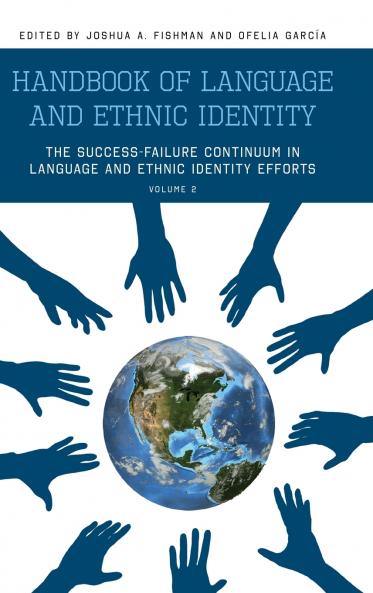
Like the first volume The Handbook of Language and Ethnic Identity Volume 2 is a reference work on the interconnection between language and ethnic identity. In this volume 37 new essays provide a systematic look at different language and ethnic identity efforts assess their relative successes and failures and place the cases on a success-failure continuum. The reasons for these failures and successes and the linguistic social and political contexts involved are subtle and highly complex. Some of these factors have to do with whether the language is considered a dialect as in the cases of Bavarian Ebonics and Scots (considered to be dialects of German American English and British English respectively). Other factors have to do with government policy as in the cases of Basque and Navajo. Still other factors are historical such as the way Canaanite was supplanted in present-day Israel by another classical language-Hebrew.Although the volume offers considerable sophistication in the treatment of language ethnicity and identity it has been written for the non-specialized reader whether student or layperson. The contributors are an international group of well-known scholars in a range of fields. Fishman and Garc?a provide a detailed introduction that addresses the difficulty of assessing the success or failure of a language. They also present a conclusion that integrates the data presented in the volume.

Piracy-free

Assured Quality

Secure Transactions

Fast Delivery

Sustainably Printed
Details
ISBN 13
9780195392456
Publication Date
-13-04-2011
Pages
-514
Weight
-815 grams
Dimensions
-156x234x33.34 mm
