




This Book is Out of Stock!
English








Hardback
₹23155
(All inclusive*)
Delivery Options
*COD & Shipping Charges may apply on certain items.
Review final details at checkout.
Looking to place a bulk order? SUBMIT DETAILS
*COD & Shipping Charges may apply on certain items.
Review final details at checkout.
₹23155
Out Of Stock
All inclusive*
About The Book
Description
Author
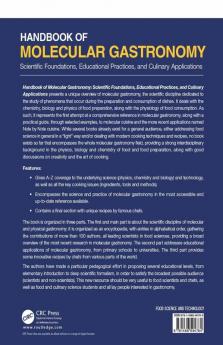
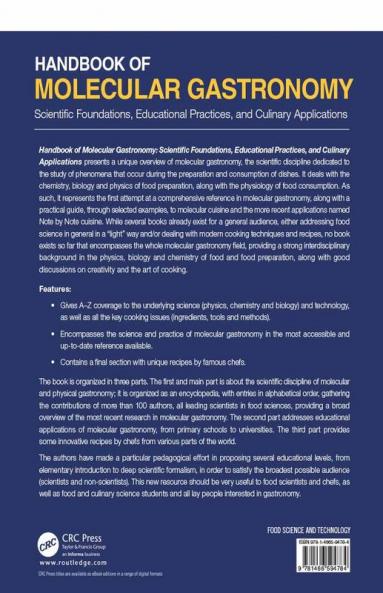
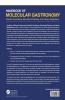
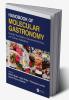
<p>Handbook of Molecular Gastronomy: Scientific Foundations and Culinary Applications presents a unique overview of molecular gastronomy, the scientific discipline dedicated to the study of phenomena that occur during the preparation and consumption of dishes. It deals with the chemistry, biology and physics of food preparation, along with the physiology of food consumption. As such, it represents the first attempt at a comprehensive reference in molecular gastronomy, along with a practical guide, through selected examples, to molecular cuisine and the more recent applications named note by note cuisine. While several books already exist for a general audience, either addressing food science in general in a "light" way and/or dealing with modern cooking techniques and recipes, no book exists so far that encompasses the whole molecular gastronomy field, providing a strong interdisciplinary background in the physics, biology and chemistry of food and food preparation, along with good discussions on creativity and the art of cooking.</p><p>Features:</p><ul> <p> </p> <li>Gives A–Z coverage to the underlying science (physics, chemistry and biology) and technology, as well as all the key cooking issues (ingredients, tools and methods).</li> </ul><ul> <p> </p> <li>Encompasses the science and practice of molecular gastronomy in the most accessible and up-to-date reference available.</li> </ul><ul> <p> </p> <li>Contains a final section with unique recipes by famous chefs.</li> </ul><p>The book is organized in three parts. The first and main part is about the scientific discipline of molecular and physical gastronomy; it is organized as an encyclopedia, with entries in alphabetical order, gathering the contributions of more than 100 authors, all leading scientists in food sciences, providing a broad overview of the most recent research in molecular gastronomy. The second part addresses educational applications of molecular gastronomy, from primary schools to universities. The third part provides some innovative recipes by chefs from various parts of the world.</p><p>The authors have made a particular pedagogical effort in proposing several educational levels, from elementary introduction to deep scientific formalism, in order to satisfy the broadest possible audience (scientists and non-scientists). This new resource should be very useful to food scientists and chefs, as well as food and culinary science students and all lay people interested in gastronomy.</p> <p>Introduction</p><p>Part I Scientific Foundations</p><p>Acids in Foods and Perception of Sourness</p><p>Anthocyanins in Food</p><p>Alcoholic Beverages: Production, Trends, Innovations</p><p>Ash in the Kitchen</p><p>Baking: Laminated Bakery Products</p><p>Baking: Chemical Leaveners</p><p>Baking: Injera – the Multi- Eyed Flat Bread</p><p>Baking: Viennoiserie – Laminated Pastry Production</p><p>Baking: How Does Starch Gelatinization Influence Texture?</p><p>Baking: Sourdough Bread</p><p>Barbecue: The Chemistry behind Cooking on a Barbecue</p><p>Bioactivity and Its Measurement</p><p>Browning: The Glycation and Maillard Reactions – Major Non- Enzymatic Browning Reactions in Food</p><p>Canning: Appert and Food Canning</p><p>Capillarity in Action</p><p>Champagne Tasting from a Scientific Perspective</p><p>Chantillys: The Cousins of Whipped Cream</p><p>Cheese: Hot Culinary Uses of Cheese</p><p>Chocolate: Chocolates from around the World, Simple Physics, Complex Flavour</p><p>Chocolate: Oral Processing of Chocolate – Successive Interplay of Sensory and Physicochemical Parameters</p><p>Coffee Preparation – from Roasted Beans to Beverage</p><p>Colour: Natural Pigments in Foods and Their Technical Uses</p><p>Cooking</p><p>Cooking: Culinary Precisions and Robustness of Recipes</p><p>Cryogenics in the Kitchen</p><p>Dairy: Milk Gels – a Gastrophysics View</p><p>Dairy: Culinary Uses of Milk, Butter and Ice Cream</p><p>Dairy: Ginger Milk Curd</p><p>Dehydration</p><p>Dispersed System Formalism</p><p>Distillation: The Behaviour of Volatile Compounds during Distillation of Hydro- Alcoholic Solutions and during Hydro- DistillationEggs: Let Us Have an Egg</p><p>Emulsions: Emulsified Systems in Food</p><p>Emulsions and Foams: Ostwald Ripening and Disproportionation in Practice</p><p>Emulsions: Lecithin</p><p>Emulsions: Emulsions and Surfactants in the Kitchen</p><p>Essential Oils</p><p>Essential Oils: How to Safely Use Essential Oils</p><p>Evaporation</p><p>Expansion</p><p>Fats and Oils: Physicochemical Properties of Edible Oils and Fats</p><p>Fats and Oils: From Fat Droplets in Plant Seeds to Novel Foods</p><p>Fats and Oils: Oxidation of Dietary Lipids</p><p>Fats and Oils: Extra Virgin Olive Oil in Cooking – Molecular Keys for Traditional and Modern Mediterranean Gastronomy</p><p>Fermentation: Kimchi</p><p>Fermentation: Fermenting Flavours with Yeast</p><p>Fermentation: A Short Scientific and Culinary Overview of Kefir</p><p>Filtration Membranes for Food Processing and Fractionation</p><p>Food Matrices and Matrix Effect in the Kitchen</p><p>Food Pairing: Is It Really about Science?</p><p>Freeze- Drying</p><p>Foams: Pickering Edible Oil Foam – Toward New Food Products</p><p>Frying</p><p>Gastrophysics: A New Scientific Approach to Eating</p><p>Gels</p><p>Heat Transfer in Culinary Sciences</p><p>Hydrocolloid Usages as Gelling and Emulsifying Agents for Culinary and Industrial Applications</p><p>Imaging Foodstuffs and Products of Culinary Transformations</p><p>Meat: Meat Tenderness and the Impact of Cooking</p><p>Meat: Heat Transfer in Meat</p><p>Meat: Reduction of Nitrate and Nitrite Salts in Meat Products – What Are the Consequences and Possible Solutions?</p><p>Microwave Heating and Modern Cuisine</p><p>Mineral Ions and Cooking</p><p>Osmosis in the Kitchen</p><p>Pasta: Durum Wheat Proteins – a Key Macronutrient for Pasta Qualities</p><p>Pasteurization in the Kitchen</p><p>Plating: The Science of Plating</p><p>Proteins and Proteases</p><p>Puddings: The Secret of the Rice Pudding</p><p>Roasting</p><p>Salt: When Should Salt Be Added to Meat Being Grilled?</p><p>Sauces</p><p>Sauces: Hollandaise Sauce</p><p>Sauces and Purées: The Underside of Applesauce</p><p>Seaweeds: Phycogastronomy – the Culinary Science of Seaweeds</p><p>Size Reduction</p><p>Smoked Foods</p><p>Sous Vide Cooking</p><p>Spherification</p><p>Squid: Gastrophysics of Squid – from Gastronomy to Science and back again</p><p>Sugars: Soft Caramel and Sucre à la Crème – an Undergraduate Experiment about Sugar Crystallization</p><p>Sugars: Sugar (and Its Substitutes) in Pastries</p><p>Sugars: Erythritol– Sucrose Mixtures out of Equilibrium – Exciting Thermodynamics in the Mouth</p><p>Sugars: Intramolecular Dehydration of Hexoses</p><p>Taste and Sound</p><p>Temporal Domination of Sensation: When Building Dishes, Let’s Take Temporality into Account</p><p>Texture: The Physics of Mouthfeel – Spreadable Food and Inulin Particle Gels</p><p>Texture: How Texture Makes Flavour</p><p>Texture: Tsukemono – the Art and Science of Preparing Crunchy Vegetables</p><p>Thickeners: Cellulose and Its Derivatives</p><p>3D Printing of Food</p><p>Umami: The Molecular Science of Umami Synergy</p><p>Part II Educational Practices</p><p>The Right Words for Improving Communication in Food Science, Food Technology, and between Food Science and Technology and a Broader Audience</p><p>Experimental Flavour Workshops</p><p>Teaching Argumentation and Inquiry through Culinary Claims</p><p>Cooking and Science Workshops: The "Soft of the World", Gelling Agents</p><p>Culinary Sciences for the Enhancement of the Public Understanding of Science</p><p>"Science and Cooking Activities" for Secondary School Students</p><p>How to Reduce Oil in French Fries: A Student Experiment</p><p>An Educational Satellite Project around the Scientific Elucidation of Culinary Precisions in Lebanon and in the Middle East</p><p>Bon Appétit, Marie Curie! A Stanford University Introductory Science of Cooking Course</p><p>Molecular Gastronomy in Science Education and Science Communication at the National University of Singapore</p><p>Molecular Gastronomy: A Universal Portal to the Molecular Sciences</p><p>Heat Transfer in the Kitchen – Exercises</p><p>Ionic Diffusion in Spherified Calcium Alginate Gels: A Laboratory Experiment</p><p>Simple Calculations Based on Cooking</p><p>Teaching and Cooking with Culinary Teachers</p><p>The Monthly INRAE- AgroParisTech Seminars on Molecular Gastronomy</p><p>Part III Culinary Applications</p><p>New Greek Cuisine</p><p>3D Printed Note by Note Recipe: Soya Lobster Prototype</p><p>Cooking (with) Olive Oil</p><p>Cooking for the Elderly</p><p>Culinary Constructivism and Note by Note Cooking</p><p>Decantation</p><p>Note by Note Recipes for a Press Conference and Tasting Organized at ITHQ, 2012</p><p>Using Liquid Nitrogen to Prepare Ice Creams in the Restaurant</p><p>A Note by Note Traditional Chinese Dinner Created and Served in Singapore</p><p>Greek Diracs</p><p>An Eclipse Dish</p><p>Modern Swiss Cooking</p><p>How Do Eggs Coagulate?</p><p>Vegetable Salad</p><p>Filtration</p><p>Waiter! There Is Garlic in My Meringue!</p><p>Lobster and Juniper</p><p>Molecular Cooking</p><p>Note by Note Cooking and Note by Note Cuisine</p><p>Spherification</p><p>The Raspberry Pear Viennoiserie</p><p>Molecular Mixology: Welcome Coffee, a Cocktail with Ten Layers</p><p>Cube of "Chicken- Carrot" with Chips of "Basil- Lemon"</p><p>Some of the Easiest Note by Note Recipes Served at Senses Restaurant</p><p>The Forest Floor</p><p>A Note by Note Macaron</p><p>Note by Note Cooking</p><p>Note by Note Sushis</p><p>Slowly Cooked Lamb Neck with Fermented Flour Pancakes, Sunchoke Puree and Beer Glaze</p>

Piracy-free

Assured Quality

Secure Transactions

Fast Delivery

Sustainably Printed
Details
ISBN 13
9781466594784
Publication Date
-14-07-2022
Pages
-894
Weight
-2546 grams
Dimensions
-210x280x48.26 mm
