




This Book is Out of Stock!




Hardback
₹27326
(All inclusive*)
Delivery Options
*COD & Shipping Charges may apply on certain items.
Review final details at checkout.
Looking to place a bulk order? SUBMIT DETAILS
*COD & Shipping Charges may apply on certain items.
Review final details at checkout.
₹27326
Out Of Stock
All inclusive*
About The Book
Description
Author
Shoutouts
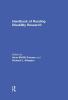
<p>Bringing together a wide range of research on reading disabilities, this comprehensive <em>Handbook</em> extends current discussion and thinking beyond a narrowly defined psychometric perspective. Emphasizing that learning to read proficiently is a long-term developmental process involving many interventions of various kinds, all keyed to individual developmental needs, it addresses traditional questions (What is the nature or causes of reading disabilities? How are reading disabilities assessed? How should reading disabilities be remediated? To what extent is remediation possible?) but from multiple or alternative perspectives. </p><p>Taking incursions into the broader research literature represented by linguistic and anthropological paradigms, as well as psychological and educational research, the volume is on the front line in exploring the relation of reading disability to learning and language, to poverty and prejudice, and to instruction and schooling. </p><p>The editors and authors are distinguished scholars with extensive research experience and publication records and numerous honors and awards from professional organizations representing the range of disciplines in the field of reading disabilities. Throughout, their contributions are contextualized within the framework of educators struggling to develop concrete instructional practices that meet the learning needs of the lowest achieving readers. </p> <p><strong>Section 1: Pespectives on Reading Disability </strong>1. Political Contexts of Reading Disability 2. Historical Contexts for Understanding Reading Disabilities 3. Poverty and Reading Disabilities 4. Ethnicity and Reading Disabilities 5. Home Language and Reading Disabilities 6. Cognitive Profiles and Reading Disabilities 7. Biological Characteristics and Reading Disabilities 8. Neurosciences and Reading Disabilities 9. Language Development and Reading Disabilities 10. Socio-cultural Aspects of Reading Disabilities 11. Critical Theory and Reading Disabilities 12. Opportunity to Learn and Reading Disabilities <strong>Section 2: Causes and Consequences of Reading Disabilities </strong>13. Individual Differences and Reading Disabilities 14. Home Differences and Reading Disabilities 15. Summer Setback and Reading Disabilities 16. Persistence of Reading Disabilities 17. Gender and Reading Disabilities 18. Drug Exposure and Reading Disabilities 19. Aliteracy, Agency, and Identity <strong>Section 3: Assessing Reading Proficiency </strong>20. Beliefs and Reading Assessment 21.Assessments for Different Goals 22. Reading Ability as Developing Expertise 23. Traditions of Reading Diagnosis 24. Assessing Reading Disabilities in ELL Student 25. Culturally Relevant Assessment of Reading Disabilities <strong>Section 4: Developmental Patterns of Reading Proficiency and Difficulties </strong>26. Emergent Literacy 27. Word Recognition and Fluency 28. Vocabulary 29. Self-regulation 30. Comprehension 31. Writing 32. Discussion 33. Motivation <strong>Section Five: Developmental Interventions </strong>34. Expert Classroom Instruction 35. Extended Learning Beyond the Classroom 36. Interventions to Develop the Phonological Systems 37. Interventions to Develop Decoding Proficiencies 38. Interventions to Enhance Fluency and Rate of Reading 39. Interventions to Enhance Vocabulary Development 40. Interventions to Enhance Narrative Comprehension 41. Interventions to Enhance Informational Text Comprehension 42. Interventions to Develop e-text Learning <strong>Section 6: Studying Reading Disabilities </strong>43. Teacher Research 44. Single-subject and Case Study Designs 45. Experimental Research 46. Observational Research 47. Interpretive Research 48. Large Database Analyses 49. Survey 50. Meta-analysis</p>

Piracy-free

Assured Quality

Secure Transactions

Fast Delivery

Sustainably Printed
Details
ISBN 13
9780805853339
Publication Date
-17-09-2010
Pages
-534
Weight
-1356 grams
Dimensions
-210x280x29.43 mm
