


by
Susan Xu
English



₹2591
(All inclusive*)
Paperback
Delivery Options
Please enter pincode to check delivery time.
*COD & Shipping Charges may apply on certain items.
Review final details at checkout.
Looking to place a bulk order? SUBMIT DETAILS
Delivery Options
Please enter pincode to check delivery time.
*COD & Shipping Charges may apply on certain items.
Review final details at checkout.
About The Book
Description
Author
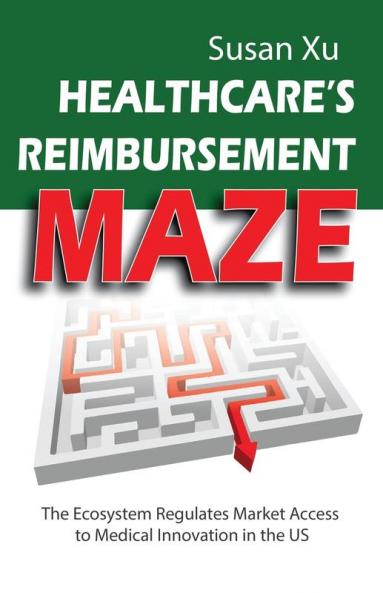
<p>The odds that a healthcare startup will fail is 90% and 20% of new businesses fold by just one year in.&nbsp;Not clearly understanding who will pay for the product and how much of the reimbursement is a deadly and easy mistake to make.</p><p><br></p><p>Every day doctors and patients face difficult choices. Should a patient with stable chest pain undergo a surgical procedure even though studies show that most patients do not benefit from procedures like coronary artery bypass graft or coronary angioplasty? And should a breast cancer patient with ductal carcinoma in situ receive radiation therapy after surgical excision to prevent recurrences that occur in 20-30% of women over 10 years? Medical innovations such as those discussed in the book offer better diagnosis and treatment options for patients in need.&nbsp;&nbsp;</p><p><br></p><p>However for a medical innovation to reach patient care it must typically be paid for. Healthcare reimbursement is the complicated and intertwined process by which a medical innovation receives payment. Healthcare reimbursement is a critical product-to-market question for entrepreneurs and venture capitalists as the answers decide the likelihood of building a sustainable and successful business from a medical innovation.</p><p><br></p><p>The healthcare reimbursement ecosystem exerts powerful forces that shape an innovation's adoption and diffusion in patient care. This book provides a detailed account of the US ecosystem regulating market access to medical innovations. Specifically in the Healthcare's Reimbursement Maze you will discover:</p><p><br></p><p>- Why medical coding is crucial to reimbursement</p><p>- How the payment systems are designed evolved and adapted to new technologies</p><p>- How public programs and private health plans decide whether to cover a new technology</p><p>- The roles of healthcare providers in the reimbursement ecosystem</p><p>- Strategies for navigating the maze of reimbursement</p>

Piracy-free

Assured Quality

Secure Transactions

Fast Delivery

Sustainably Printed
Details
ISBN 13
9798988269458
Publication Date
-07-07-2023
Pages
-368
Weight
-433 grams
Dimensions
-140x216x20.83 mm
