

English


Hardback
₹11666
₹14959
22.01% OFF
(All inclusive*)
Delivery Options
Please enter pincode to check delivery time.
*COD & Shipping Charges may apply on certain items.
Review final details at checkout.
Looking to place a bulk order? SUBMIT DETAILS
Delivery Options
Please enter pincode to check delivery time.
*COD & Shipping Charges may apply on certain items.
Review final details at checkout.
About The Book
Description
Author
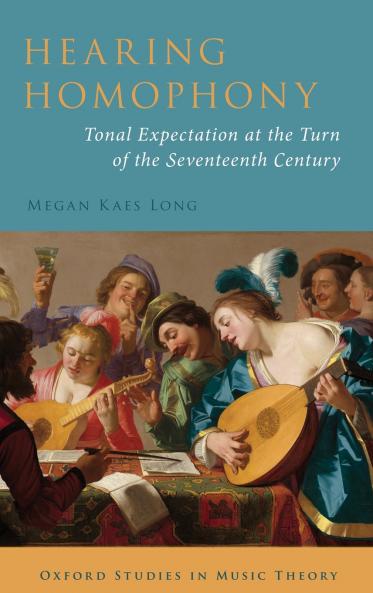
The question of tonality's origins in music's pitch content has long vexed many scholars of music theory. However tonality is not ultimately defined by pitch alone but rather by pitch's interaction with elements like rhythm meter phrase structure and form. <em>Hearing Homophony</em> investigates the elusive early history of tonality by examining a constellation of late-Renaissance popular songs which flourished throughout Western Europe at the turn of the seventeenth century. Megan Kaes Long argues that it is in these songs rather than in more ambitious secular and sacred works that the foundations of eighteenth century style are found. Arguing that tonality emerges from features of modal counterpoint - in particular the rhythmic phrase structural and formal processes that govern it - and drawing on the arguments of theorists such as Dahlhaus Powers and Barnett she asserts that modality and tonality are different in kind and not mutually exclusive. <p/>Using several hundred homophonic partsongs from Italy Germany England and France Long addresses a historical question of critical importance to music theory musicology and music performance. <em>Hearing Homophony</em> presents not only a new model of tonality's origins but also a more comprehensive understanding of what tonality is providing novel insight into the challenging world of seventeenth-century music.<br>

Piracy-free

Assured Quality

Secure Transactions

Fast Delivery

Sustainably Printed
Details
ISBN 13
9780190851903
Publication Date
-01-05-2020
Pages
-300
Weight
-521 grams
Dimensions
-156x234x17.46 mm
